The Silicon Valley Tech Podcast |
Part 1 - Interview of Wendy Fitzwilliam
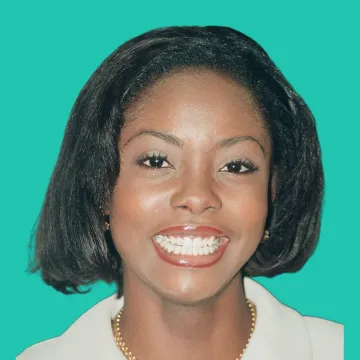
Wendy Fitzwilliam, Miss Universe 1998 and former UN Goodwill Ambassador
Wendy Fitzwilliam won Miss Universe 1998 while in her final year of law school, in only the second pageant she had ever entered. She tells Shawn Flynn and Sunil S Ranka how modelling since the age of 11 and moot court prepared her for that moment, why saying yes to opportunity matters, and how she has built and kept an authentic global network. She also reflects on becoming known worldwide just as the internet took off, raising her son with grounded values, and how technology — from mobile payments for farmers across Africa to apps like HopStop — is connecting the world.


Guest
Wendy Fitzwilliam
Miss Universe 1998 and former UN Goodwill Ambassador
See full bio: Wendy Fitzwilliam
About Wendy
Wendy Fitzwilliam won Miss Universe 1998 while in her final year of law school, in only the second pageant she had ever entered. Modelling since the age of 11 and moot court prepared her for that moment, and she went on to serve as a UN Goodwill Ambassador, becoming known worldwide just as the internet took off.
Today she is building an animation hub in Trinidad and Tobago that serves clients around the world, and champions the country's push into technology. On the show she talks about saying yes to opportunity, keeping an authentic global network, why every leader needs an inner circle that tells them the truth, and how to build a personal or company brand that is willing to evolve.
Transcript
This is Silicon Valley Tech, Behind The Scenes, a podcast hosted by Shawn Flynn and Sunil S Ranka. Here's where we talk to the real heroes to find out how decisions are made and how they're executed to create the thriving businesses of tomorrow. So while I was a newbie in the pageant world, Miss Universe was only the second pageant I ever attended in my life. The one I competed in, furthermore, participated in. It was only the 2nd pageant I participated in. You know, it's almost unheard of to go from not knowing anything about pageants to winning Miss Universe, which is a Super Bowl of pageantry. But moot court at law school prepared me to answer questions on the flyer and to think on my feet.
Wendy, thank you for taking the time today to be on the Silicon Valley Tech Podcast. Now, we are very excited about this interview, but for our listeners at home, I mean, you're Miss 1998 Miss Universe. Now, through your pageant career. There were many steps from beginning to finally become Miss Universe. Many people, not just entrepreneurs, have trouble expanding their comfort zone. How did you do it? What advice can you share for our listeners? Thanks, Shawn. Great to be on with you today. And it's a series of things because Miss Trinidad and Tobago and Miss Universe, coming from a small Twin Island Republic, is huge and not at the same time. Any career in entertainment generally is perceived as a hard job. It's a hobby as opposed to a career. So what I realized after, because it seemed as if Miss Universe happened hazardly for me, a friend of mine entered me into the competition. It's not like Miss USA or Miss India, where there are 60,000 women vying to be the representative of their countries for that year. In Trinidad, it was Wendy and 11 other young women. And there was no preliminary competition and this pageant, that pageant. And it was just, my friend submitted my photographs, the national director liked it.
And next thing you know, I'm in the newspaper as a finalist, right? So, but that sounds very ad hoc. The bottom line is I started modeling when I was 11 years old and not in the traditional way. One of our best known artists at the time, painters at the time saw me at the National Museum and said to my art teacher, she took us to see his exhibition. He had just returned to Trinidad from Europe. He said to her, he would like to paint me. And she said, sure, if you come to school and teach a class. And then he kept painting me. And then, you know, I never said no to opportunities like that. So my first modeling gig, my first television advertisement, all of those things, I think, led to that moment. And I think it's very important for us to connect those dots. So while I was a newbie in the pageant world, Miss Universe was only the second pageant I ever attended. In my life, the one I competed in, furthermore, participated in. It was only the second pageant I participated in. You know, it's almost unheard of to go from not knowing anything about pageants to winning Miss Universe, which is a Super Bowl of pageantry. But moot court at law school prepared me to answer questions on the fire and to think on my feet of the fact that I'd been modeling at that point, you know, for 10 years.
20 years. 12 years before. Gave me the confidence, the poise to perform on stage. Little things like that. Very, very important, I think, in terms of how that opportunity came around. And as I said, I said yes. I was in my final year at law school when I participated at Miss Universe. Most of my friends told me, are you mad? What are you doing? If you go to court to argue a case, everybody's going to see you in a bikini. A judge will never take you seriously. And I thought to myself, OK, but once I open my mouth, he'll get past Wendy in a bikini.
And so that determination, that drive, I think I inherited from my parents. My environment, Trinidad and Tobago, is made up of a lot of different people. So we're very comfortable culturally in spaces that someone who looks like me in most of the cultures would not be. And also. And also, as I said, the fact that I say yes a lot. Now, I'm not careless. I'm just very much in tune. And I've always been, I think, with my gut. You know, my gut, I believe, is my spiritual self talking to my physical self. And when it says go for something, I go for it. Head first. Right in. This is great. You talked about things like things falling in kind of a lap for you, but you worked hard towards achieving the success. One important thing you said. Yes to opportunity is very important. So our millennial people or everyone who's listening to this show right now, the importance of success is not about working hard, but looking at opportunities, spotting them and saying yes to the opportunity. And finding opportunities, Sunil, sorry, where it may seem opportunity does not exist. And this is where you're.
That's why when you have been called beauty with the brain. Moving on to the next one, which is. You talked about in our pre-show, you talked about, you know, the global network and very importantly, you said that the prime minister of your country had a really great relationship with the prime minister, Tanzania, because they went to school together and then that brought up a lot of opportunity for the country and betterment. Can you just talk about you being a beauty pageant, one of the first four women of color and maybe second from, from Trinidad and Tobago, how does this global connection or network helps? Yeah, I mean, it's, it's a really good question. Great question. And I can't stress enough the importance building a network and maintaining your network in whatever you do. You know, there are a lot of women who participate in competitions like Miss Universe, a lot of woman and young men who have careers as models or engineers or whatever, and they move on to other things. And then those relationships fall off and it's like building over. Yeah. And I think a lot of the people who succeed in business and a lot of people who are entrepreneurs by nature are very good at that.
And that is maintaining human relationships, interactions, connectivity. You know, when I was competing at Miss Universe, I was there competing with 81 other women. I didn't think I would win the competition. I knew I would do well because I'm like that, but I w I didn't, think I wasn't so confident. I was like, Oh, I'm going to win this. I'll take it home. So I made up my mind, um, in Hawaii, all those years ago, I'm going back to Trinidad to write my finals at law school. I'm going to have a wicked time here. And after this is over, I am going to have to have friends all over the planet. And that's exactly what I did. So, you know, I still keep in touch with my roommate at the time, South Africa, who was the first Indian national of South Africa to become Miss South Africa. I've maintained a relationship with many of the types. I've been in touch with many of the people that I've worked with in the past, and I've been able to connect with a lot of the people who have worked with me in the past. So I think it's very important that I keep in touch with the people that have worked with Zuzabini and the current title holders before me, after me, the current title holder, Zuzabine, and it's not just in that space professionally as well. It's so important. You never know when you will have to tap into your network and you never know how those dots connect. So I think very important not to throw human beings away.
And the network is not only a sparring upwards. In other words, I have not only kept in touch over the years and whatever, but I have kept in touch with a lot more people. Whatever sphere, with the presidents of the companies that I have met or countries, et cetera, but with anyone with whom I connect. So I clearly remember you talked about Tanzania. A few years ago, I had an opportunity to work as a consultant there, and I had met a young lady in America, quite by chance, at the United Nations from Tanzania, who was an attorney like myself, but a practicing one, unlike me, and happened to be from the part of the country. I was primarily working while I was there. I was doing this consultancy, and it was very difficult penetrating some of the elders of the villages with whom I had to interact. And I called her out of the blue. You know, as I said, we had just had a great time at the UN. I was a goodwill ambassador of the United Nations at the time, and goodwill ambassadors tended to be a little bit shielded from Joe Public at the UN, and I happened to be entering the UN at the same time as this young lady. We hit it off. We had lunch together that day because we were in a working session. She thought that was so special. She moved mountains for me in Tanzania after, and mountains in a way in which the president of the country could not have.
Do you understand where I'm coming from? So building that network and maintaining it usually requires a connection. I firmly believe in that. It has to be authentic, in other words. That's what I'm saying. Because if it's not, it's impossible to maintain it. Then you don't connect. Then you don't connect in a genuine, real way. And once you do, maintaining, appreciating those connections, those relationships, and maintaining them becomes easy for you and the persons with whom you're interacting. Now, this global network that you mentioned and maintaining it, I mean, out of nowhere you became this global celebrity overnight. What was that pressure like? How big is that responsibility for being a symbol of your country and the people? Look, Sean, in the Trini context, now that is something that's really hard to explain because Miss Universe is a temporary job. A great one, but it's a job you have for one year. So if you, American, where there are lots of celebrities, you know, America's had, I don't know, you know if Gwyneth Paltrow is taking a minute off to have a family and run a company, there are many, many other actors, etc. Trinidad and Tobago is tiny. And because there are two things with me.
I come from a tiny country where there are few well-known personalities that are launched quickly, seemingly overnight onto the international stage. And two, I became Miss Universe just as the Internet was blowing up internationally. If you recall, 1995 was when the Internet became a thing in America largely, and Americans generally had access to the Internet. The rest of the world, that happened in 1997 through, I would say, 1999. Those were the years when the Internet started to take off. So I was the first title holder that my part of the world and a lot of the developing world lived her year in real time. So it wasn't like I did a story on CNN today and my people or, you know, the people of the African continent saw it two weeks later. If I was doing a story in America or in the UK or South Africa. Everyone saw it at the same time for the first time. So that allowed me, I think, an audience, what I call a forever audience. And why? Because not so much about me. You know, it was the perfect storm. I was the first black woman to win the competition in 20 years. The first one also being a Trinidadian, by the way.
I became the title holder at the time. The Internet was blowing up. So the world, the rest of the world, that meaning outside of the US and Western Europe, lived my year in real time with me. And in the rest of world, pageantry is huge. So still to this day, you know, when I travel to the African continent or to Asia or to Latin America, I live in my head. That's been 22 years. I'm like way over it to a large extent. You know, so I may be, you know. Purchasing an ice cream cone or something for my child in Colombia. And just going about business. And then people are waving at me frantically or running me down the street. And in my real life, I don't live as a celebrity, if you know what I mean. So it's been interesting from that perspective, you know, living it through my son's eyes because he was born into it. So he thought until he was five, the first time he left home without me. You know, he never went anywhere in Trinidad without me until he was 5 years old. And he asked me the most odd question when he came back from a little outing to the mall with my neighbors. He said to me, Mommy, why doesn't anyone know Auntie Nicole and Uncle Dexter?
Why does the whole world know you? And why don't they not know me when I am not with you? And I was like at five, how did he figure this out? But it's because in his life up until that point, simple everyday things. I buy my own groceries, which I enjoy. You know what I mean? We go to our little fast food places, restaurants, etc. And everybody's like, Hi, Wendy. Hi, Elon. Hi. So he just assumed everyone in the world knew everybody else. And that's how it was until he left home without me. That is fun. But it's also sometimes a challenge to manage, particularly with him, because I had to work hard for what I have achieved. And I know life before the fame. My son does not. And sometimes, you know, he's given things. And I constantly am telling him that's not how life works. You have to work. Nobody's going to come and just hand you stuff. He's like, really? Well, look, it's happening right now. So I manage that in my home and with my friends. You know, like right now, today, I'm doing a little bit of work at the house and he's in charge and he's making sure that things go properly. And if they do not, he'll be penalized.
There'll be no PlayStation for a week. So this is very interesting that a famous personality, a crown jewel of Trinidad tobacco is mother at heart. Making sure you're instigating the value system into the kid so that he's ready for the world. This is very impressive. Now, you talked about no PlayStation for the week. You talked about some of your conversation of technology. How do you think about that? How do you think technology can solve some of the problems you have seen in the world? And when I say world, you talked about part of the world where, you know, people may have heard about it, but not have explored. The parts of Africa, parts of rural, you know Eastern Africa or parts of Trinidad and Tobago. Can you shed light that how technology can really solve a problem? So I think technology has already done a phenomenal job in terms of connecting us. That's one. Exposing us to each other, which breaks down, you know, those barriers of bigotry and other things that we are dealing with very aggressively in the West now. You know, the online space, the social media space is very, very different in that regard for most.
That exposure has been great in terms of building young entrepreneurs, building businesses, etc. And why? Because you can go straight to market now in a large way without the need. Yeah. I've seen firsthand on the African continent because most of the countries in Africa were locked out of the traditional banking system for a very long time. They've gone straight to smart money. You know, credit cards will never be a thing for most of the African continent. There is no transition for them. Many of the farmers who produce cashews in Tanzania or peanuts on the west coast of Africa or whatever, they are paid because they are so far from traditional institutions. Etc. Right onto their mobile phones. I mean, there are charging stations in the outback of Tanzania, Kenya, Mozambique, etc. For mobile phones. Because having that connection, my friend, is as important as having oxygen. Right? You may not have electricity at home, but you have a mobile phone. I want you to wrap your mind around that. So that means the technology has in many ways impacted our planet very positively. Yeah. That's right. That's right, that's right. That's right! Yeah. Yeah. Yeah. Yeah. Yeah. Yeah. Yeah. Yeah. Yeah. Yeah. Yeah. Yeah. Yeah. Yeah. Yeah. Yeah. Yeah. Yeah. ową Bye behind.
Yes. Bye bye. Bye bye. Dunn. Hi. How are you? Good. I've just got some information. Why not? Yeah, I have a question. Why? I mean, I want to catch this up with you. How can we lowering our alert with the idea of you as the source of things that you would like to teach or do? You are�트 man, and I want first of all to thank you for the agreeing to make this topic. A few of us, not all of us and not many of us, but there are a few of us who are twisted enough to use the technology that was developed to progress us, I think, as a species and to progress our planet in ugly ways. So I think, again, what is, if you look at what's going on in the news now with Facebook and others, they're being beaten up badly. And I think it's an opportunity for those kind of companies to partner with a few others and figure out there's a wonderful business opportunity in there, in the cleanup that they're missing. So I challenged those guys to, because the intention of the technology initially was to connect us in healthy ways. And I challenged. I challenged them to find ways to bring us back on stream and turn the ugly, the challenges into positivity. I don't know, because that's not my wheelhouse at all.
To those technologies. And if they don't have that oomph again, as you know, you guys come from this space. You know, some of the chances I took when I was younger, like being a student attorney and participating in a beauty pageant at the same time in a small country. I am not going to do that in my forties. Thank you very much. I may not be able to take that risk. So I'm seeing that there's an opportunity with some of our younger creatives in the technology space to push us even further beyond where we are. We were very focused on speed and connectivity. I think to a large extent, our technology companies have to help us get back to our humanity. That would make the fair of the wider population in terms of. Artificial intelligence, less, for example, there are so many things that the technology can do and share more broadly and grow into, and I'm sure that there are companies working on that kind of thing already. For example, I have a very good friend who went to school with my sister in New York, went to Baruch College, Trinidad at Chiron. I don't know if you know this guy, but he has sold two companies already to Apple, one to Apple, sorry, and one to USA Today in the technology.
And he has sold two companies already to Apple, one to Apple, sorry, and one to USA Today in the technology. Do you remember an app called HopStop that was his connecting transit systems, et cetera, with restaurants and entertainment centers in big cities and doing so in real time? So it would not only tell you how to get to where you're going, but what the wait time is if you're thinking of going to a particular establishment to eat, blah, blah, blah, but for the end user, seamless and very easy. Me, the end user. Not so tech savvy. And now. So creating, he did another app, as I said, that was sold to USA Today after creating a couple of apps and doing phenomenally well in that space. He now runs with his partner, a company called the Love and Magic Company, which sounded initially when he explained that to me on a beach in Jamaica years ago, three years ago, like, okay, then you're enjoying Jamaica a little too much, but it actually makes perfect sense. And I can see in much the same. The same way I saw market for HopStop years ago, I can see the same kind interest opportunity growing for that company, you know, definitely has a space. We need more of that.
Thank you for listening to Silicon Valley Tech Behind the Scenes. To find out more, contact the team or to be a guest on the show, visit our website at siliconvalleytechpodcast.com. We look forward to hearing from you. And remember to support. The show by leaving a review to encourage us to keep creating great content like this.
Part 1 - Interview of Wendy Fitzwilliam
Wendy Fitzwilliam, Miss Universe 1998 from Trinidad and Tobago, joins Shawn Flynn and Sunil S Ranka.
- Going from a pageant newcomer to Miss Universe, and the modelling and moot-court experience that prepared her
- Saying yes to opportunity and trusting your gut
- Building and maintaining an authentic network, and how one chance meeting at the United Nations opened doors in Tanzania
- Becoming a global name just as the internet took off, and the "forever audience" that followed
- Raising her son with the value of hard work
- How technology connects the world, from mobile money for farmers across Africa to the next opportunity for Silicon Valley
Latest episodes
-
Part 2 - Interview of Wendy Fitzwilliam
Wendy Fitzwilliam, Miss Universe 1998 and former UN Goodwill Ambassador
-
Interview of Larry Kesslin, Chief Connector at SPIRE
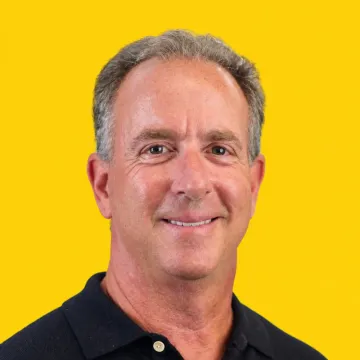
Larry Kesslin, Chief Connector at SPIRE
-
Part 2 - Interview of Prem Jain, CEO at Pensando Systems
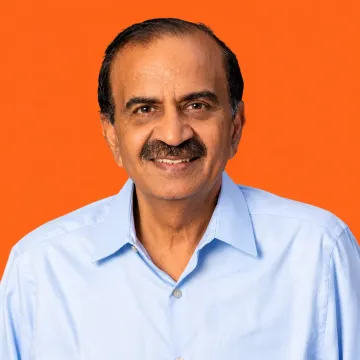
Prem Jain, CEO at Pensando Systems
-
Part 2 - Interview of David Womark, an American Film Producer
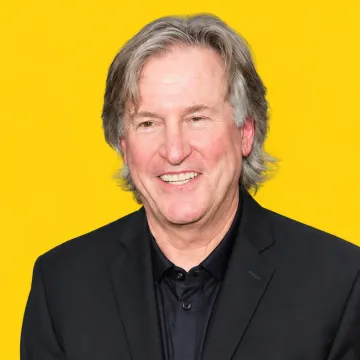
David Womark, an American Film Producer
-
Interview of Lou Pambianco - Chairman and CEO of Startup Sandbox and Managing Director of Corporate Development Partners
Lou Pambianco, Chairman and CEO of Startup Sandbox and Managing Director of Corporate Development Partners
-
Part 1- Interview of David Womark, an American Film Producer
David Womark, an American Film Producer
-
Interview of Jitendra Waral, Senior Research Analyst - Internet & Consumer Electronics at Bloomberg Intelligence
Jitendra Waral, Senior Research Analyst - Internet & Consumer Electronics at Bloomberg Intelligence
-
Interview of Nigel G. Salina - An International Consultant, Philanthropist, Public Speaker, Entrepreneur
Nigel G. Salina, An International Consultant, Philanthropist, Public Speaker, Entrepreneur