The Silicon Valley Tech Podcast |
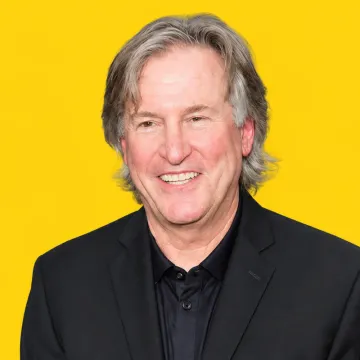
Part 2 - Interview of David Womark, an American Film Producer
David Womark, an American Film Producer
David Womark is an American Film Producer who has worked on over 35 films including, How the Grinch Stole Christmas and Life of Pi. With Ang Lee and Gil Netter, he was nominated for an Academy Award for his work on Life of Pi. Life of Pi was also nominated for multiple Academy,…


About David
- American film producer.
- Shared a Best Picture Academy Award nomination for Life of Pi with Ang Lee and Gil Netter.
- Was a producer on Peter Berg’s Deepwater Horizon.
- Has worked on more than 35 films, including How the Grinch Stole Christmas.
Transcript
This is Silicon Valley Tech, Behind The Scenes, a podcast hosted by Shawn Flynn and Sunil S Ranka. Here's where we talk to the real heroes to find out how decisions are made and how they're executed to create the thriving businesses of tomorrow. Showing things to people is a much better form of communication. That's why, you know, you look at all the classic in your world, the tech lectures, jobs, gates. It's usually always the annual rollout of new hardware and software. It's done visually. So to me, I think that's the biggest thing is making sure that we're all communicating visually because the visual communication has more unity in terms of understanding. Whereas words, we all know sometimes everybody can look at things differently. I think always having a visual element to any discussion for success.
And this is part two of our two-part series with David Womart, who is an American film producer who was nominated for the Academy Award for his work on Life of Pi. Now, in part one, we talked about the similarities between tech and movies, David's journey into the Hollywood, and much more. But today's episode, well, I don't want to spoil too much for you. So let's get right into the episode. Enjoy.
So during, when you take this journey, do you have an end product visual? Is it visualized already in your mind or every step of the way you make the decision? I think, again, I'm going to use Ang Lee as a filmmaker. I think the great filmmakers do both. They have a sense of where they want to go, but they're open to opportunities and to nature and to the organic elements of the process. Example, for many months in preparation, Ang visualized the arrival of Pi in Mexico, which is the first movie in the history of cinema. The first time he puts his foot on land, almost like from here to eternity, almost like Jesus holding the rope and pulling this boat in through the water and there were waves and he's walking through the waves with his last strength of energy. But the location we chose, that was a perfect match to the actual Mexico location, even though it was very similar, never has waves. And in fact, Ang's roommate had told him, because he owns a hotel there, said, maybe if there's a storm. But usually it's just one to two feet. So we show up that morning and Ang is still hoping that the cinema guides are going to give him waves. But there are no waves. And he looks at all of us, basically says, build a handheld camera.
And he did a completely different shot, which is the shot that's in the film. And it's probably a much better shot because it starts above the boat, Pi falling off and you see his foot underwater on one shot. Touched land the first time and it happens underwater, followed by him collapsing on the beach. So that's like a jazz. That's somebody that goes, sometimes you have to play jazz. You just can't play the notes because if you play the notes, you don't get the waves or you have to do them with visual effects and it's going to look terrible. So there is, yes, there's definitely a reactive part, but I think that's in any product because you learn things as you go through and you have to take that information and figure out how you achieve your goal and adapting. Nobody gets there. There is no, even in your products, there's always revelations. Correct me if I'm wrong. Very interesting analogy between the product, what you talked about in the product we built. But we as technologists have an opportunity to do a very controlled release, release it to a set of users, take a feedback and continue to improvise it. In the filmmaking... You said the word improvise. Right. But in your case, do you have that opportunity where you can make a film, do a controlled release, take the feedback, improvise it?
Is that an opportunity? That's what you're saying. Film 2.0. Hmm. You know, it's a different process, but it's similar. What we will do, all filmmakers will do, is once they have their first cut, what is called the director's cut, they'll screen it to the producers and they in their circle that they're comfortable with. And then slowly you have to screen it to studio. You're going to screen it. You're going screen it to audiences, family and friends. So you're constantly along that journey, getting feedback and adjusting. Constantly. And then there are official test screenings that you have near the end of the journey where you can still modify things. So it's a constant journey of tweaking and modification. From that perspective, the only difference I would say is, is our 10.0 is never followed by a 10.1. Is there any story where the film is fully done and then you guys go back to the drawing board and say, man, you know what? We made a mistake. I mean, we should have done it differently. But I mean, I think it's like with an app, you can make a bad app and release it. And historically, it will be remembered as a bad app. You can give me some examples. You probably have them. And I think it'S the same thing with film.
At some point, you have to determine that the product is done and there's only so much you can change. Let's use my favorite analogy, the audience, the viewer versus the user experience or user interface. It's similar. You know, you can get a lot of feedback. You can get feedback about user experience and user interface, and we can do a lot of test screenings, but at some point, it falls in the hands of the audience customer and they decide they're the ultimate decision makers in any process. David, I have a question for you. I mean, here in Silicon Valley, investors will look at a product, analyze the market size potential. They'll look at the team and go, okay, what's their track record? Should I bet on them? And they, you know, calculate. If I invest this much, the likelihood of my return in this amount of time will be around this range. How do producers look at a script or an idea and make that judgment? This is something to invest in. I think it's interesting. I came up with an idea for an app a year and a half ago, and I'm currently partnered with Farshida Mazeta, who's the ex-head of Electronic Arts, Mobile Gaming, and Apps. It's a $1.5 billion industry, a little cottage industry, and what appealed to me about the idea of the app ended up appealing to him.
So I think in this case, it's a media assistant type app, and it helps you find content in a world of endless choices, and it's called streaming, S-T-R-M-I-N. But just to go back to the way I met Farshida, who grew up in the tech world, who still is involved in the tech, and has built many apps. Sims, Simpsons games, addressing the challenge itself has to be something you're interested in doing. Because my little understanding of your world is that somebody identifies a challenge or a pain point and goes, wow, there must be a smarter or better or more efficient or more effective way of solving this problem through technology. And I think if the problem itself is something that appeals to you, it's very similar to what we do in film. So it's the same. I think, too, if you have a story about a little Indian boy in a boat, and you discover at the end of this whole long journey that you have your choice of either believing the story you saw was true, or it was a mask for something else, or that both of these stories exist. It's something you get to choose, but you're attracted to it because you liked the idea to begin with. So I think it's very similar in that respect. Yes, you look at a story.
You look at the elements of who's involved. Whether that's actors, director, producer, studio, whoever, what's the product, what's story, what's challenge, executing. And it's very, very similar. I mean, if you think about it, every movie is a startup. It's one of a kind. You know, it's a startup with, again, without a 10.1. It stops at whatever that last version is that gets released. So we have some finality. You guys have a little harder because it can go on forever. So, David, one of the fundamental shifts. What? What I'm seeing is nowadays with the availability of stronger iPhone cameras or any mobile cameras plus availability of Netflix or any TikTok or any platform, right? That's eating up the traditional business of the movie because I don't need to wait till Friday. How do you perceive this whole industry changing over the years? I think, first of all, the industry has already changed. That's why we're calling our media assistant stream. Because conceptually, film and television are exhibition options now. Everything is pretty much streamed. It's streamed even into the movie theater to digital streaming that you're watching on a different screen in a different format.
So if you think of it in that context, then you really have to look at the structure from professional, just like sports, for example. Professionally executed and produced material and material that's done on the fly. And there's room for everything. I don't think either category threatens the other because they're so different. You know, TikTok with 100 million views, I don't really think is going to be a threat to Top Gun 2. It's a separate world. I think this Reddit, and this is one of the reasons I got involved in this app, is that we're now at a juncture where it's become very hard because of this proliferation, thanks to streaming, and decentralization, thanks to all the streaming companies and all the little fiefdoms that they've created. It's. Made it much more challenging for the user to find material that they want to view. And a lot of the algorithms that the companies are using now currently are financial algorithms and not necessarily user-friendly. But I, like in everything in the tech business, I definitely see that that's probably the next challenge, the next level of viewing is making the viewer's choice, making it have more impact on the actual selection. Because right now, we're kind of being told what to watch by visually putting things in front of us, in the foreground.
You know, if you think about it, the menus dictate so many times, that's your first interface. Unless you're coming in with something you know. If it's something you want to watch and it's already a choice you've made, then it's simple. But I think most of us, when we choose content or music, the whole fun of it is, it's to browse, it's the find something new. David, I couldn't agree more. I had a conversation. I had a conversation the other day with an individual about the algorithms just providing us data. Basically, the conversation was, he asked me if I'd seen this YouTube commercial that appears every moment on his feed. And I said, I'd never seen it. And he's like, no, no,no,no. It's all the time. It's happened in the last 30 days. I said, no, it's not. It's not. The algorithm's not pointing that in my direction. And we had this one of those moments where I was like, oh, my God. What's the data in that the movie industry uses? Or the analytics to kind of feed into that decision process? I'm just so curious about the movie industry and that decision to make that movie. Are there surveys, analytics? What's the algorithm that goes, this movie is going to be more successful or have a higher probability of success? I will quote the easiest and most famous book there is about the film business and applies to the television business as well.
And it's William Goldman, Adventures in Screenwriting. Nobody knows anything. We don't know. We find out, we discover, we try and put as many elements together. But at some point it goes back to what we were talking before about the user deciding and the user will decide which app to play with, which movie or television to stream. And it's really up to you. So at some point, it does become the app developer, the producer, the director going, this is a challenge. I want to address via this medium. And I think that really is so parallel because even in your business, you know, you can have 20 apps in the same arena. And sometimes none of them click. Sometimes one or two of them click and there's a battle to somebody, the last person standing. Or sometimes there's no battle. It just story gets continued because nothing works yet. So it's very similar. Nobody knows anything. You go with your gut. So, David, in this world of technology, how movies and technologies are merging together? How important is technology for the success of a movie? I think technology has given the entertainment business amazing access to users and amazing tools.
And if you think of those two things, because they're kind of separate, access to users, because it's now, right, there's no limit. Pre-streaming. There was X amount of content to watch. Now it's the cloud goes forever and they're streaming infinity of content. On the tool side, it's digital development, obviously. But it's also, to go back to the first side, too, you have the marketing side where now all of a sudden you can, as a filmmaker, be more in touch with your audience. You can, as an filmmaker, release little things along the way. Easter eggs, clips. It's a little bit like social media. So everything is kind of solid, I think, now, like social media. So I think technology has hopefully, once we figure out how to make the users' choices better when they're streaming and less frustrating, has been a positive influence because more choices, more tools. So, David, I think a few weeks back when we were initially talking, you brought a very interesting point that COVID and filmmaking, people are not able to meet. Social distancing is prevalent. It needs to be. How do you see the future of moviemaking between now and next few months or two years now?
In terms of what? Sorry, I lost the question. In terms of What, Sunil? Okay. The COVID has fundamentally changed the way we behave in a society. Social distancing is a must. But when it comes to the moviemaking, you have to be close-knit. You have to work together as a team. Now, with COVID being there, social distancing is prevalent. What do you see? What are the key changes or how do you see the film making changing between now and next few years? I think filmmaking, entertainment will be very much parallel to the rest of these industries where it will be step by step. Initially, it will have to probably be solved by quarantine. Quarantine so that actors are comfortable interacting with each other because that's the most important element. Really, everybody else can distance themselves because they're not on camera. Once you're on camera, you can't make an entire film with a restriction. Social distancing because unless it's a movie about quarantine. But I do think as an optimist, you know, we'll look back at these days as another challenge. And in a year or two from now, once there's a vaccine and it's safe, we'll be doing the same thing we've done for almost 100 years. Beautiful. Like most of the small business got wiped out during this COVID, they are on the verge of bankruptcy.
What do you see from a financial standpoint? What are the impact of filmmaking? I think the impact on the entertainment industry is very similar to sports and the amusement industry. We're an interactive workplace where people have to interact with each other in order to get the product made. You can't completely do a film on Zoom, although you could probably be a Zoom film. But for most films, that's not really a solution. It's a temporary solution and it restricts your options in storytelling. So I do think for our business. It's been much more difficult as it has been for the theme park business and sports business. And let us not forget, most importantly, all the people that work in these industries really don't work remote and can't work remote. So they're sitting at home right now with a double edged sword. And that's why I think it's challenging right now to be a politician, to be a leader, because you have people sitting at home. On the one hand, I need to go back to work. On the other hand, I want to be safe, myself and my family. I think those are very difficult decisions. I think every. Everybody's dealing with, but I think people in the entertainment industry and sports and as I mentioned, theme park, or, you know, it's going to be a lot harder. That's why I think Governor Newsom has put us in stage four.
The amusement parks, I believe, are stage three. Film production, television production, I believe is now stage four of the reopening of the last stage. Got it. This has been an entertaining. So, David, we ask this question to everyone. Sure. Hit me. Anything which we. Did not ask you and you would love listener to listen to any story, which you fundamentally believe should be put out there. I think we hit, I think we had some good stuff. I can't think of anything else right now. The top of my head. That that's, you know, sure. I'll say one thing. I'll say when I'll be political, why not? I think one of the great opportunities, reducing life apart and working with that goes beyond even the film itself. It goes to the fact that the. The book and the film have a theme of all stories can coexist. And I think because of my journey of growing up in the Middle East, that was such an important aspect to the film that was important for me to be involved in and very proud of. And as we see now in the age of COVID-19, I think that's another tool that we can all use is that all our stories exist and they can coexist. I think it comes down to the word respect. Thank you, guys.
Thank you for listening to Silicon Valley Tech. Thank you for watching. See you next time. Silicon Valley Tech behind the scenes. To find out more, contact the team or to be a guest on the show. Visit our website at Silicon Valley Tech podcast dot com. We look forward to hearing from you. And remember to support the show by leaving a review to encourage us to keep creating great content like this.
Part 2 - Interview of David Womark, an American Film Producer
David Womark is an American Film Producer who has worked on over 35 films including, How the Grinch Stole Christmas and Life of Pi. With Ang Lee and Gil Netter, he was nominated for an Academy Award for his work on Life of Pi. Life of Pi was also nominated for multiple Academy, BAFTA and Golden Globe awards including Best Picture and Best Director and was an American Film Institute official selection for “Best Movie of the Year”.
David also served as Producer on Pete Berg's highly acclaimed "Deepwater Horizon" film: depicting the disaster in April 2010 when the Deepwater Horizon offshore oil-rig exploded--resulting in the worst oil spill in American history.
In this part of the episode we talked about:
- Algorithms behind a successful movie
- How movies and technologies are merging together, how important is a technology for the success of a movie
- Covid impact on film making and the future of film making in upcoming few years
- The financial standpoint of any film making
Help us reach new listeners by leaving us a rating and review! It takes less than 30 seconds and really helps our show grow, which allows us to bring on even better guests for you all! Thank you – we really appreciate it!
Learn more about David Womark
Wikipedia: En.wikipedia.org
Follow Silicon Valley Tech Podcast on:
Contact Us: (650) 701-3468 / info@svtechpodcast.com
About Hosts:
Latest episodes
-
Part 2 - Interview of Wendy Fitzwilliam
Wendy Fitzwilliam, Miss Universe 1998 and former UN Goodwill Ambassador
-
Part 1 - Interview of Wendy Fitzwilliam
Wendy Fitzwilliam, Miss Universe 1998 and former UN Goodwill Ambassador
-
Interview of Larry Kesslin, Chief Connector at SPIRE
Larry Kesslin, Chief Connector at SPIRE
-
Part 2 - Interview of Prem Jain, CEO at Pensando Systems
Prem Jain, CEO at Pensando Systems
-
Interview of Lou Pambianco - Chairman and CEO of Startup Sandbox and Managing Director of Corporate Development Partners
Lou Pambianco, Chairman and CEO of Startup Sandbox and Managing Director of Corporate Development Partners
-
Part 1- Interview of David Womark, an American Film Producer
David Womark, an American Film Producer
-
Interview of Jitendra Waral, Senior Research Analyst - Internet & Consumer Electronics at Bloomberg Intelligence
Jitendra Waral, Senior Research Analyst - Internet & Consumer Electronics at Bloomberg Intelligence
-
Interview of Nigel G. Salina - An International Consultant, Philanthropist, Public Speaker, Entrepreneur
Nigel G. Salina, An International Consultant, Philanthropist, Public Speaker, Entrepreneur