The Silicon Valley Tech Podcast |
Part 2 - Interview of Prem Jain, CEO at Pensando Systems
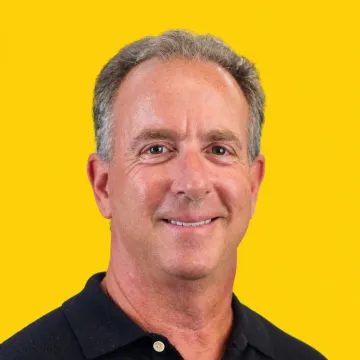
Prem Jain, CEO at Pensando Systems
Prem Jain is the CEO at Pensando Systems. He has overall 35+ years of vast experience in IT industry in which he worked more than 18 years for Cisco. He was also founder of Insieme Networks. Prem did his B. Tech from one of the premium Institutes of India, BITS Pilani and then…


About Prem
- Co-founded Pensando Systems in 2017 and was its CEO at the time of the interview.
- AMD completed its acquisition of Pensando in May 2022, valued at about $1.9 billion.
- Spent more than 20 years at Cisco, including as SVP and General Manager of a business unit.
- Part of the founding teams of Cisco spin-ins Andiamo Systems, Nuova Systems and Insieme Networks; was CEO of Insieme.
- Worked at Crescendo, which Cisco acquired, before joining Cisco.
Transcript
This is Silicon Valley Tech, Behind The Scenes, a podcast hosted by Shawn Flynn and Sunil S Ranka. Here's where we talk to the real heroes to find out how decisions are made and how they're executed to create the thriving businesses of tomorrow. Your team is very critical. You know, your team is the one which is really you need to make sure that there is no politics between the team. You are very transparent, honest about working with each other, respect each other in a much more stronger fashion. And that's very, very important because I've seen a lot of companies because the original founders don't agree with each other. Or they fight among themselves, or they think you should be going left and the other thing should be going right. I think once you make all the facts on the table, you can make the right decision. The other thing is make sure that you understand who your customer is in detail. We think that we have developed the technologies and I know the customer is, but it's very important to get a feedback from the customer. Get their feedback. We always do that in our product families. We always go talk to the customers before we even build the first product to make sure that we get that feedback. And the last but not the least, whatever you're doing it, enjoy it, execute it, and make sure that you are not. And welcome to part two of our two part interview series of Prem Jain.
Now, remember, Prem is that guy that is not sold one, not two, but multiple companies to Cisco. And he's now the CEO and officer of Passando. Systems, one of the most talked about startups in Silicon Valley. On today's show, we talk about what is Jainism and how can one strike a balance between work and personal life? What is Passando, a highly talked about startup here in Silicon Valley? What do they do? What does Prem see in the future for this technology and much more? So let's just dive into this week's episode of the Silicon Valley Tech Podcast. Enjoy. This is classic learning what we can get from someone who has so accomplished. You're a business leader. You have equally contributed to the local community and education institute. I mean, this is phenomenal. And this is my personal experience. I have seen you growing in terms of every aspect 20 years back. So for the listeners, we celebrate 20th anniversary this weekend for one of the institutions which Prem Jain contributed significantly in every aspect. It's called Jain Temple. That has not only changed the way of living for people, but it has fundamentally. Given the gift of Jainism for the generations to come.
So we owe him a lot. How do you strike a balance between all your busy schedule? I think it's a very good question. And a lot of people wonder how you can achieve or you can do certain things. I think to me is the most important thing which I found works is one is the time management. You need to really know the time management is very important that you have to be very efficient because if you want to do certain things, you have to know the time. Second thing is. I found is that what you like to do, you always have time. It's very, very important because if you are doing it just for sake of doing it, okay, forget it. I'm not going to do it. I'm not doing it for my heart. So I think it has to come from your heart or whatever you're doing it. Third is you need to balance between the family and everything else that you do. So, you know, I have two kids. They were growing up and, you know you have to spend the time you have to take them to baseball game. You have to take down to tennis, you know whatever it goes on and their tournaments. As you know, very well, I mean, you know, sometimes Sacramento, sometimes in LA and you have to find time. So I think is most important thing is manage your time, manage your time very wisely. And also there are certain things, which is you can always delegate also, you don't need to do everything yourself. And you know, once you're lagging behind, get for help, don't assume that you can do everything yourself, I will, if I took a commitment, I think the most important thing is once you take a commitment, you need to fulfill the commitment.
Otherwise don't take it. I mean, there are a lot of other people. There are people who can help you out and they can do it better than you then find, you know, those people who can do a better job than you, and then you tell them, take care of it. So it's a tough questions and I don't have a simple answer, but the example I'm giving you, I think that's the way I have done it myself. And, uh, you know I never looked at it that I'm working 18 hours and I'm working 17 hours because I want to do it. And if you need to do it, there is no limit. You know, you need to make sure that you have a good health and that's another good thing is you need to eat properly. And, uh. Maintain your health and don't say that I'm a workaholic. People used to call me workaholic, but, uh, you know, it's again, their definition because they think why you need to work it so long. And I said, you know I also tell people, you know you have to work smart, not the longer, which is also very important concept, which is I learned, but on the other hand, sometimes it takes time. So just for the listeners information, Prem does mission peak every single day, I believe there's not has been a single day when he does mission peak. I believe there is not has been. A single day when. When he had an opportunity, he would make a point to do a mission peak height daily basis. Now I've always seen you practicing GNV of life. And when we hosted you at one of the community gathering, you said you've been practicing that in your business as well.
How does it help you to make the certain decisions? It's a very important question. One is that, uh, you know, just like, uh, in politics and religion, they don't go together. The religious, you know thing and the at workplace. Definitely. Don't go together, right? We don't go together because we respect all the religions and, you know, we have people from all different religions. They come to work the way your values, my values, like I said, you know I learned quite a bit because I come from a very religious family in India. And also when I was growing up myself, I was wanting to make sure that follow all the basic fundamentals, the principles. So there are three basic things, which is I use, and I'll give you an example, how I use it, which is basically a fundamental principles, which is a lot of gen practice it. It's, we call it AAA, it's easy to remember because AAA is a famous term in Northern California, if you want to get a car insurance, you go to AAA. That's one of the choice. So we made it that as an acronym and make sure that people can remember that. What it means is there are three basic fundamentals, which is one is anekantwad, which is a Sanskrit word, but I'll translate it, is a theory of multiple city. What this really means, and this I use all the time. Between me and myself and the employees, say if I am the manager and I'm talking to the employee.
What it tells you, you need to see both sides of the story. Just don't say that I'm the manager. I'm telling you what you need to do. You need to put yourself into the shoes of the employee when he's telling you something. And this is the same thing. I think the lot of examples was given when you are moving, when you are in a train, which is train is moving. Is the train is moving or the outside world is moving. When you are outside, you will see train is moving when you are inside the train. You think the outside world. Is moving. These are very important concept, I think, which is people can use it in marketing, when you're looking at the analysis, you're looking for many different angles. So, for example, if I want to find out what is the market share of certain thing is like when we were doing the UCS. So say how many servers are being sold? Well, the another way to look at it, how many NIC, which goes inside the servers are sold. Another way to look, how many operating systems are being sold. So you look at it from a different dimensions. Answer will be more. It's going to be much more accurate because you're looking at from a multiple point of view, and this is very, very important in business. You know, I say I'm coming from this particular philosophy, but in general, I think when I tell this to a lot of people, they really like this model because you like to look at it. Any decisions that you're making many different point of views, even your family life, but a lot of people get divorced because they never looked at what the, what's the problem you have with your spouse.
You need to understand both sides to really resolve the thing. Life is full of compromise guys. Even in business. Even in business is full of compromise and you need to make the right compromise, which is good for the business. Good for the people. Good for the family. So this is the theory of and it's a lot of documents written on this and stuff like that, which I use very effectively. The second one, which I really like it. And I practice it is the theory. Ahimsa ahimsa means non-violence and you know, it happened to be John Lewis who just passed away, you know, a couple of days ago, he was the champion in the US Congress for non-violence. You look at it, eulogy, which is given by Barack Obama just a couple of days ago, talked about the Gandhian principles, talked about how he really practiced it. And he basically, when the police was hitting him, he just put his head down. Very rare you will find that kind of person. I'm really sad that we lost a champion for this principle, Ahimsa. And he was really good. He was really a great person, which is really never, ever give up. That's the characteristics you need to learn from him and in startups, in the entrepreneurship, that's the biggest thing we need to find out.
Even if your company failed, like in my case, David systems failed. The thing which I learned is never gave up, but going back to the Ahimsa, the way I use that is that look in your language, when you speak, you have to speak a very good language, particularly in businesses, even more critical. And you know that we have a loose tongue. If you speak bad words, whatever the circumstances is, if somebody affects you, it's much easier to say, never, ever do that. What I found out is that if you follow this principle of nonviolence, nonviolence is not just physical violence. This is even in your thought, in your thinking, in your language, the way you are representing yourself. I think people can say, you know, you're not a violent person because you never get angry. Obviously I get angry too, by the way, but you know, very rare. And once I get angry. I know what is, what to do. I just walk out of the room and I just find a quiet time to, you know, rewind that particular moment in my life. So Ahimsa is another one, which is, I follow it all over the place. And even in the food, for example, when I have a employee coming to my house or I have all hands or whatever it is, I personally never order food, which is minimum has to be vegetarian. And if it's vegan, it's even better, but I basically tell them that, look, this is a philosophy I follow.
And you know, funny. No, I never saw a resistance from anybody says, Oh yeah, I'm not going to come because you don't serve me that or you don't sell alcohol and stuff like that. So I think it's very important that you not only follow you demonstrate that you're doing it. Then people believe in you. If you just start, it has no value. The third thing, which is very important is what I call it. And this is, I'll tell you is two example, which I always refer to people is the word is a paragraph, which is mean I'll translate is non-attachable. It's a word that means attachment and attachment is the problem for most of the problems you have, like I'm building a new product. If I get attached to too much, even I know that the market is changing, nothing is happening in the field. I will so attack, I will never make a right decision. So I'll keep on pushing money into this. I'll keep them continuing this particular program because my ego is attached to it, that I decided to do this. I can't let it fail. Non-attachment tells you, you detach yourself when you make a decision. And you don't make decisions. This is mine. You know, when you're making a decision for your son, if you make a decision in the same way, it's my son and I can tolerate anything. You detach yourself says, look, I'm making a decision. For some young guy who I want to succeed. What's the right thing to do for him? That is a very difficult thing to do in life.
And I'll tell you, it took me a while to practice myself. Okay. To detach. You came empty handed. You're going to go empty handed. What is the attachment is all about. Think from that point of view. Life is, it gives us a lot of opportunities. This attachment. I also tell people has to be very frugal. What does that really mean? Is that when you're spending the money, you need to spend in a very frugal way. It does not mean you don't spend the money. It means you spend the money in a smart way. And how do you do that? Because you need to make sure that when you are spending the money you assume, you know, sometimes people assume it's my money. I don't even look at that. It's my money or their money, his money. It doesn't matter. His money. And I need to make it sure that I'm not wasting it. But I'm not. I'm not, you know, attaching to a particular program. I'm doing it. I need to make sure that I spend only that much money, which is absolutely needed to make that program very successful. And I'll give you an example. For many, many years, I use this particular thing for doing my budget in the company. And you won't believe it. Nobody ever questioned my budget. All other people used to say, well, you got all your budget. How come my budget got cut into half? Because people say, OK, you're, you know. Making the numbers higher. You know, because you know that is going to get cut. I told everybody that I don't buffer it. I don't do any of those things.
I'm very straightforward person and just take it. And based upon this particular thing, you know that I have no attachment. If you take it away from me and you find a better person, I don't have any attachment to this particular position's title. Nothing. I don't believe in that. So these are the principles which is very, very important to leverage in your life, daily life, 24 by 7. And I will not do it assuming that they come from the journalism and stuff like that. I think these are good principles. And I learned from all the religion, you know, and take the best out of everything and then mix it together. And I use it in my life. I think what happens is what you told us about Jainism is such a short span of time. It would take years for people to understand. Now, there are so many questions. And as Sean said at the beginning, first few conversation is leading to more conversations. But we want to just make sure that. People get to know you a little bit more better. And you talked about the changing philosophy. You talked about the change in notion within the industry. And you talked so many different things where you're catching the wave. Now, Pensando means thinking. And you have created the most top startup in Silicon Valley where John Chambers is on the board.
Can you please share with our listeners what are you disrupting now? Very good question. And John Chambers is not only on the board. He's the chairman of the board. And we are very proud of him. You know, we've worked with him for so many years. Learned a lot, you know, from him. I think you always need somebody to bounce the idea. So three people in the company I really bounce the idea with quite a bit is Mario, Duka, and John. And get their feedback and stuff like that. And you need to have a sounding board to make sure that you get their input. And, you know. People have different experience, different mindset. And you may not agree all the time. I think that's the beauty of working together with all of us is that. But once we make a decision, we just assume that we all agree. That's another important ask. Coming back to the question which you asked. What are we disrupting as a part of the Pensando? I think so we started with a Pensando like you said is thinking. We said new way of thinking. That's the way. So that itself will tell you that we are looking for a transition. So let me give you some of the examples. We always looking in the beginning when we started Pensando. It says what transitions are going on at this particular moment. People were moving from the enterprise to the cloud. That was one condition which was going on.
People were growing the cloud because they thought it's much easy to. I don't need to invest anything. I just need whatever the CPU memory I need. So we looked at seven or eight different conditions, which is a thing. And we say, how can we disrupt with our innovations, those transitions? So we could be very successful in terms of making the impact in the industry. So what we are disrupting? We are disrupting cloud. One is that cloud is already 10 years old, as you know very well. If you look at a lot of cloud development started in your technology. On average, the life cycle is about 10 years. So you have to look for that. Okay, they're going to go through some transition. So what we're thinking is when we started with the cloud will move to the edge cloud, which is very important. Think about why. Because of the IoT. Because of the 5G. Because of other places. Because of other places where the customer very close to the enterprise customers. And I want to build a hybrid cloud. If I'm at the edge, much, much easier for me to build it. So that's one thing I think, which is you're going to hear quite a bit about it. The edge cloud. And because cloud is coming to the metro, say, for example. That's another transition, which is basically we call it edge cloud at the edge. Second disruption is the enterprise networking. These people are learning from the cloud and saying, I want to really build it so I can also build my own cloud going forward.
So we said, okay, if you need to build your own cloud, that means what technologies I'm going to use. And cloud means a couple of things. Virtualizations or non-virtualization. It doesn't really matter going forward because people have bare metal versus a virtualized or container as a part of the offering for the cloud. But at the same time, I need to make sure that I have my infrastructure that can be automated. So I can provide services just like I get from the cloud. Within the enterprise itself. So that's another transition which is occurring in the industry. So we wanted to make sure that we can provide the technology in these areas which can make these transitions to really keep up with the need of the customers, which is they have. So enterprise customers is looking for transition. Cloud people are looking for transition and some of the cloud vendors which don't have this kind of technology is what we have. Amazon is the only one which has technologies because they acquired a company called Annapurna. A couple of years ago, and that became their internal engine for developing some technologies and innovation. And what we are doing is right now is a generation ahead of them. At the same time, we are also building, you know, technologies very, very quickly. I mean, every 18 months we produce a new chip, which is really remarkable for a small startup company to be able to produce capabilities 16 nanometers and then 7 nanometers.
In a very short time. In a span of three and a half years, which is how old we are. So I think these are the disruptions which we are looking at it. We are very successful. We are partnered here with HPE. We are partnered with the IBM. We are partnered Oracle. We partner with NetApps. These are our partners, which is already giving us, you know, the fruit of this transition, which is occurring in this particular industries. And we still have a long way to go. But we start seeing the train moving in the direction. Which is what we like to see it happen. So what I'm hearing is someone is taking on Amazon. The big is in the cloud transition is coming in. And it is totally ties up with what you just talked about at the beginning of the conversation, which was disruption in bringing the distributed versus centralized. And I think when you talk about managing centrally, the distributed environment is nothing but the disruption in the cloud edge technology. So this is phenomenal. Sean, you can take the next one. I mean, I guess with, I mean, we want to be respectful of your time, but this has just been absolutely amazing. You just mentioned things come in 10-year cycle. It always seems like you're 10 years ahead that thinking that far in the future. Is there any advice you can give to entrepreneurs or business leaders out there of how these decisions are made for implementing things in the future, planning the business?
Any advice you can get before closing up? Yeah. Sean, this is very good questions. And there is no one single recipe which really works for everybody. What I found the way of doing it is different than the other people have done it. But there are certain fundamentals, I think, which is very, very important when you're already started or looking to start a venture, particularly. So the things which is you have to look for is I think what we have done it and I'll summarize it transition because you never want to do a me too, unless you create so much differentiation in the me too. You know that you can succeed. Always look for transition for the new thing. For example, the hotel industry is going through a transition with Airbnb. Now, with the COVID-19, you don't know what's actually happening now. How long this is going to happen, how it's going to recover it. So there are some variables which is going to come and hurdle you. So look for transitions and look for the market where the waves are going. And now this pandemic is going to be very, very, very difficult. I think it's going be very, really difficult. I think it is going to take a lot of time. I think it will take a lot more time. I think it takes a lot of effort. I think it'll take a lot longer. I think it has to be done. I think it should be done. I think it should be done. I think it's going to take a lot more time. So look for the transition and look for the market where the waves are going. And now this pandemic is not going to happen. You know, I hope will never happen again. But you never know. And you can never plan for it. I don't think we plan for it, I don't anybody else can plan for it but you have to live with it. So you have to be very careful now to not let it happen. And I think I think that it's going be very difficult for people to live with. And I think that people have to move on to new things. I think that that's the most important thing that they have to live with and they have to move on. We have to move forward. We can't move on. and you can never plan for it. I don't think we plan for it, I don't anybody else can plan for it but you have to live with it.
So you have to be very careful now to look at the changes which is occurring in the industry, changes occurring in the area where you're working on, make sure you adjust. One of the classic thing which is we don't do it is if the change already occurred, adopt the change. Don't resist because if you resist, you're going to fail because it's one of those phenomena that COVID is here. Now he says, okay, I will insist all my employees to come and work in the office. They're not going to come. I just wrote a blog today, LinkedIn related to this. Remote is a reality, guys, we need to face it. So now figure it out, what's the best way to use this particular environment for your benefit? And when we come out from the COVID-19, make sure that you prepare the company better than where you were when you went in because you will get a lot of opportunities. There's no shortage of opportunities, opportunities will come, but make sure that we manage it very well because otherwise, you know, this is a very critical time because funding is going to be very tight. There are a lot of people are unemployed. You know, the market is going to take some time, you know, to recover. Some of the people who are thinking, I'm going to make revenue in Q3, Q4, may have to postpone it if the revenue does not come because hospitality industry, I mean, look at it, really in a very bad shape. And I hope they all recover and don't become the victim of this particular thing. The other thing is very important is your team is very critical.
You know, your team is the one which is really, you need to make sure that your team is critical. You know, you team is the, one which is, really, you need to make sure that there's no politics between the team. You are very transparent, honest about working with each other, respect each other in a much more stronger fashion. That's very, very important because I've seen a lot of companies because the original founders don't agree with each other or they fight among themselves or they think you should be going left and the other thing should be going right. I think once you make all the facts on the table, you can make the right decision. The other thing is make sure that you understand who your customer is in detail. We think that we have developed the technologies and I know the customer is, but, you know, so, yeah. is, but it's very important to get feedback from the customer. Get their feedback. We always do that in our product families. We always go talk to the customers before we even build the first product to make sure that we get that feedback. And the last but not the least, whatever you're doing it, enjoy it, execute it, and make sure that you are not taking care of your family and taking care of your friends. And now it's more important that make sure that your work environment is very safe and people are very healthy. And Prem, thank you for taking the time today to be on Silicon Valley Tech. If anyone wants to find out more about yourself, Pensando, what's the best way to go about doing it? Pensando is very easy. We have a website. It's called www.pensando.io.
They can always reach out there. As far as reaching to me, it's very easy to reach to me. I'm on LinkedIn. All they need to do is send me a message and I typically try to respond. Very easily. Or if they need to really reach out to me personally, they can talk to Sunil. That's perfect. We'll have Sunil's email and the show notes and all his personal contact information for our audience out there. Prem, I learned a ton. I'm going to listen to this multiple times. For everyone at home listening, please like, share, put the five-star review on iTunes. It encourages us to make more great content like this. So once again, Prem, thank you for your time today on Silicon Valley Tech. I really enjoyed it. Working with both of you, Sunil, as well as Sean.
Thank you for listening to Silicon Valley Tech Behind the Scenes. To find out more, contact the team, or to be a guest on the show, visit our website at siliconvalleytechpodcasts.com. We look forward to hearing from you and remember to support the show by leaving a review to encourage us to keep creating great content like this.
Part 2 - Interview of Prem Jain, CEO at Pensando Systems
Prem Jain is the CEO at Pensando Systems. He has overall 35+ years of vast experience in IT industry in which he worked more than 18 years for Cisco. He was also founder of Insieme Networks. Prem did his B. Tech from one of the premium Institutes of India, BITS Pilani and then MS from USA, University of California, Davis. A business leader, you have equally contributed to the local community and education institute.
In this interview we talked about:
-
What is Jainism and how can one strike a balance between work and personal life.
-
Disruptions in Technologies in today's time.
-
How these decisions are made for implement things in the future plan in the business, advice to entrepreneurs or business leaders.
-
3 Fundamental Principles that Prem Jain follows in day to day life.
Help us reach new listeners by leaving us a rating and review! It takes less than 30 seconds and really helps our show grow, which allows us to bring on even better guests for you all! Thank you – we really appreciate it!
Learn more about Prem Jain:
Twitter: @prem_jain2
Follow Silicon Valley Tech Podcast on:
Contact Us: (650) 701-3468 / info@svtechpodcast.com
About Hosts:
Latest episodes
-
Part 2 - Interview of Wendy Fitzwilliam
Wendy Fitzwilliam, Miss Universe 1998 and former UN Goodwill Ambassador
-
Part 1 - Interview of Wendy Fitzwilliam
Wendy Fitzwilliam, Miss Universe 1998 and former UN Goodwill Ambassador
-
Interview of Larry Kesslin, Chief Connector at SPIRE
Larry Kesslin, Chief Connector at SPIRE
-
Part 2 - Interview of David Womark, an American Film Producer
David Womark, an American Film Producer
-
Interview of Lou Pambianco - Chairman and CEO of Startup Sandbox and Managing Director of Corporate Development Partners
Lou Pambianco, Chairman and CEO of Startup Sandbox and Managing Director of Corporate Development Partners
-
Part 1- Interview of David Womark, an American Film Producer
David Womark, an American Film Producer
-
Interview of Jitendra Waral, Senior Research Analyst - Internet & Consumer Electronics at Bloomberg Intelligence
Jitendra Waral, Senior Research Analyst - Internet & Consumer Electronics at Bloomberg Intelligence
-
Interview of Nigel G. Salina - An International Consultant, Philanthropist, Public Speaker, Entrepreneur
Nigel G. Salina, An International Consultant, Philanthropist, Public Speaker, Entrepreneur