The Silicon Valley Tech Podcast |
Part 2 - Interview of Wendy Fitzwilliam
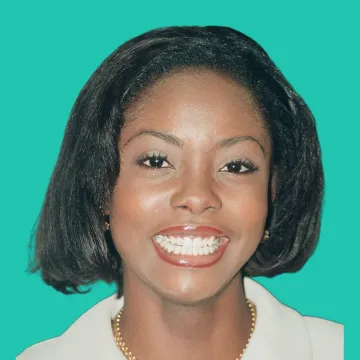
Wendy Fitzwilliam, Miss Universe 1998 and former UN Goodwill Ambassador
In the second part of the conversation, Wendy Fitzwilliam talks about working with Donald Trump, who owned the Miss Universe organisation during her reign, and why every leader needs an inner circle that will tell them the truth. She describes Trinidad and Tobago's push into technology, the University of Trinidad and Tobago, and the animation hub she is building to serve clients around the world — then closes with her advice on building a personal or company brand that is authentic and willing to evolve.


Guest
Wendy Fitzwilliam
Miss Universe 1998 and former UN Goodwill Ambassador
See full bio: Wendy Fitzwilliam
About Wendy
Wendy Fitzwilliam won Miss Universe 1998 while in her final year of law school, in only the second pageant she had ever entered. Modelling since the age of 11 and moot court prepared her for that moment, and she went on to serve as a UN Goodwill Ambassador, becoming known worldwide just as the internet took off.
Today she is building an animation hub in Trinidad and Tobago that serves clients around the world, and champions the country's push into technology. On the show she talks about saying yes to opportunity, keeping an authentic global network, why every leader needs an inner circle that tells them the truth, and how to build a personal or company brand that is willing to evolve.
Transcript
This is Silicon Valley Tech, Behind The Scenes, a podcast hosted by Shawn Flynn and Sunil S Ranka. Here's where we talk to the real heroes to find out how decisions are made and how they're executed to create the thriving businesses of tomorrow. The reason why GE was able to survive and the reason why Madonna was able to survive long past her generation, the reason why the stones have been able to survive, you know, the reason why Beyonce is still at the top of her game after doing so well, you know the reason why all, I think, companies and persons who stand the test of time survive is because they are authentic to who they are. They're not trying to compete necessarily with anyone else. They compete with themselves. Does that answer your question, Sunil? Oh, it answers it more, but I had to cut in there because I know if Sunil got the chance to do it, he would have been able to do it. But I don't think he could have done it. He would go into another question on tech, but I have to cut him off because I have a kind of a curious question here, and I know our listeners are going to ask this or get upset with us if we don't ask this. You were Miss Universe in 1998, but President Trump owned the pageant from 1996 to 2015. Did you ever get a chance to meet him, and do you have any stories that you can share now? We can get back to tech after, but before then, we have to ask this.
What's the question? Absolutely, and I can tell you, tech could wait forever, but Mr. Trump's stories cannot wait forever. So go for it, Wendy. So yes, it was actually Mr. Trump second full title holder. He acquired the competition during the year of Alicia Machado from Venezuela. There's been a lot of talk about Alicia and her relationship with Mr. Trump in the lead up to your elections. I have to say, that my universe experience was phenomenal, and Mr. Trump was and continues, continued to be, because I haven't been in touch with him actually since January 2015 was the last time we communicated. But over the years, he would always insist that, you know, I participate with other title holders. I think that he respected in various activities for the company, January 2015, being the last one. And if you think about that, that's a long time after I won this universe. You know, he endorsed my book and gave me a little blurb when I wrote my book several years ago, which I released in 2009, I think. So he was a lot of fun during that year, very respectful, just as brash as close to Russell Simmons. I had a good relationship with Sean P. Diddy Combs as well. As a matter of fact, Russell had a group, Jodeci, who had a huge, huge, huge relationship with him.
He monster hit the summer that I won this universe. All my life was the name of the song. It was a song to which I did the evening gown competition. And so that's why it follows me everywhere, that particular song. And he was very fun, could laugh at himself, a little bit brash, as I said. I look on now and I'm just like, wow, what is, wow, is all I have to say. Absolute power is a very scary thing, is all I have to say. I think if we don't have persons in our sphere who will stand up to us and sometimes who are not dependent on us. And I think this is a, Mr. Trump's story for me is an opportunity, again, a learning opportunity. And why I say that, because when you are Miss Universe, the people you work with, soldiers, soldiers, soldiers of the universe, soldiers of this universe, soldiers, the people who are in charge of the universe, they are the ones who are in control of the universe. And so the job is to make you happy so you can go out there and make money. Because think about it, nobody cares who the president of Miss Universe is or who the financial controller. Miss Universe is the company to the, everything public facing is all about that individual. So everybody's telling you how great you are all the time, how fantastic, blah, blah, that could really go to your head, right? Three months in, you're like, I am queen of the world, right? Which is not actually the case. And if you think like that, then you lose a lot because then you don't create the genuine connections I spoke about earlier that are important to sustain you after the great temporary job is over. Similarly, I think being the president of any country, but particularly the most powerful country on the planet is a very, very lonely job.
You know, even guys like his predecessor talked about that, talked about the fact that he may have been stayed by nature, but he became much more reserved and less trusting of people in that role. Because it demands that because everybody around you wants something from you. So I think it's so important to have people in your sphere who are not dependent on you for a paycheck, who are not dependant on you for their popularity, et cetera, or their power that you know will give it to you straight. And those people are usually not people you've met recently. The Johnny come lately is whether you're running a huge corporation or not. That's the guy or the girl. Yeah. The guy or the girl that pitched marbles with you, that slapped you up a couple of times as a kid, you know, that you may not speak to every day, but you know, when you have a tough decision to make, you can count on that person to give it to you straight, straight up the real deal. And I wish Mr. Trump had a little bit more of that in his life. This is phenomenal. And I can tell you for the listeners and especially the millennials, some of the things, what she's, what Wendy said in last a minute or so. This is really, this is a life long learning that depend on people, have an inner circle whom you can depend upon to make the critical life decisions. And those people are not going to be the Joe and Harry of the corner block, but these are going to be the people who have grown up with and have a trusted relationship. And this is very important. And this goes for every entrepreneur, every budding entrepreneur or everyone who wants to make a career or establish career in different ways, in a different domains and different fields. Just to give you a little bit of a chance, I'm not going to give you a lot of information, but I want you to know that you have a lot of opportunities. And I know that you're going to be able to give it to people who are going to make a successful career. And I can tell you for the listeners, who are going to be able to do that.
This is phenomenal. Now moving back to, from Mr. Trump, from tea to another tea, which is technology. And I can see that you are very passionate about. What we talked briefly was you're involved in a first digital animation program in Trinidad and Tobago. Tell us more about the program, how it started and how it's improvising or empowering the youth of the country. And what do you see in the idealistic world where the program will head to? Yes. So a few years ago, roughly 15 years ago, actually, we decided as a country, we would make a significant push into the technology space, leveraging the energy sector initially in Trinidad and Tobago, but realizing that energy being the, at that time, second largest consumer of technology on the planet behind the government of the United States of America, we couldn't jump in with the energy companies at the top of the floor. We had to find ways to build capacity here before our energy partners would take us seriously. We also, country, as I said, made up of peoples of the entire planet. You will find a little bit of everything here. You know, we have a large Indian population, Africans, of course, from West Africa. European base is English, Portuguese, Spanish, and French. We have a large Chinese population as well, a few Japanese and others. We have a large Syrian Lebanese population. And the Syrian Lebanese population is large, not in terms of their numbers, it's a relatively small number, but in the non-energy economy, the Arab population, the Syrian Lebanees population dominates. And that has allowed for a level of creativity, ingenuity that you rarely find in one country.
So we decided, with the presence of the big players in energy here, with the talent we have coming out of our carnival, many festivals, et cetera, the creativity of our young people, that animation would be one of the subsets in the technology space that we would go after. We created the University of Trinidad and Tobago with programs that would be able to make a difference. We created the University of Trinidad and Tobago with programs that complement, I would say, our traditional university, the University of the West Indies. So at UTT, the University Trinidad, Tobago, you will not find a law program, natural sciences, traditional medicine, even. Everything is technology and industry focused, and it complements the traditional disciplines. In much the same way, you know, the East Coast of America created MIT, which very much supports and has a symbiotic relationship with the Harvard University of Trinidad-Tobago. So we created the University, the University, of Trinida and Tobago, and we created the University of Trindad and Tobago. We created MIT, which is one of the most important universities in the world, and we created the University of Trinidad and Tobago, and we have a whole team of students, including the students of Harvard, Sunil, etc., of the East Coast. That being said, our animation program, which was started by a national, we brought back, so for all of our programs at the university, we brought back accomplished national in their fields, basically set up these programs and we partnered with universities across the planet that were the best in field. This young lady came back to Trinidad, our then chairman, the founder of the university as well, convinced her that she should leave the U.S. and go to the U.K. and the U.N. and the other universities that are in the U.K. and return. She set up the animation program with the support of, again, her network out of the U. K. and the U.S., Los Angeles particularly. And young people have done very creative things in that space locally, but also gone on to careers outside of Trinidad and Tobago.
And we recognize having a few young animation companies here, also that we were creating technicians and specialists. In a space in which we did not have a viable industry for them to grow locally, that we needed to create that opportunity as well, hence the animation hub, which is that part of the university project within the university that will become a company I am working on. The animation hub is exactly that, using both our graduates and our current students to service the needs of local clients in the animation space, and both animation and gaming, working with international clients. Through that network that we've developed over the last 15 years in this space to service clients in the U.S., in Latin America, in Asia, in Europe, and also building our talent, creating product here that we can export. So we in the relatively early stages, we launch next month at the end of October, the 30th of October, at the hub. But we have been working with local clients. We have been working with local clients, and we have been in touch with them. We have been working with local customers. We have worked with local clients for a long time. We have just onboarded an international client. Yay! And we are very aggressively building out the business animation and gaming in Trinidad and Tobago through the hub at the university.
Wendy, we really want to be respectful of your time. We've had so much information here on tech, current presidents, and all this other great stuff. But with that, can you share some final thoughts on building and maintaining an international client? And can you share some final thoughts on building and maintaining an international client? And can you tell us what you think about building and maintaining a company? And can you give us a little bit of an overview of what you think of building and maintaining an international client, whether it's an individual or a company brand? Great question. And your brand, I think, let's focus on the individual first. And this applies to companies as well. It has to be authentic, and it also has to be nimble. It has to be able to morph and move the times wherever we are going. If you think of the companies that blew up, you know, after the last major crisis. I'm not talking about 2008. I'm talking about the Great Depression coming out of the US, you know, the Procter & Gamble's of the world, the GE, as opposed to like, you know. Some of the others that were around at that time. I'm not going to drop too many names because I don't want to get myself in trouble. You know, but the reason why GE was able to survive and the reason why Madonna was able to survive long past her generation, the reason why the Stones have been able to survive, you know, and the reason that Beyonce is still at the top of her game after doing so well, you know, the reason why all, I think, companies and persons who stand the test of time survive is because they are authentic to who they are. They're not trying to compete necessarily with anyone else. They compete with themselves, and they morph into improved, better versions of themselves with the times. You have to be willing to hold on to what makes you you and recognize what makes you, you. So, I think it's important to be able to do that. I think it is important to be able to do that. I think it is important to be able to do what makes you you and recognize what makes you.
I know, for example, I am not like a to-do girl. My brand will never be very trendy, you know. Look at me. These two holes I have in my ears, the same two my mother put there when I was nine months old. I'm not the girl for the body piercings and the tattoos. Nothing against the girls with the body piercings or the tattoos. That's just not who I am. So, now that body piercngs and tattoos have become wildly popular, I'm not going to be the girl for that. I'm going to be a girl for the tattoos. I'm not popular. Again, in my 40s, I'm not going to gravitate towards body piercings and tattoos because to my audience in the entertainment space, that would read as inauthentic because it just is not me. That's a very superficial example, but that's a good example. And despite the fact that my look is not trendy right now, my look has still worked for me because my look combined with what comes out of my mouth is authentically Wendy. Do you understand where I'm coming from? And it's not always wildly popular, but it's consistent and it has consistently paid the bills.
And the same holds for corporations, I think. I use the example of GE because GE has been one that has really stood the test of time. You know, I think of like Kodak Eastman and how huge that was around the time I was born. I think of the time when I was born, I think about the time when I was a little girl and how Kodak Eastman may have fallen off because they didn't very aggressively move into digital technology. So their dominance as a retailer disappeared largely. Not that the company has disappeared, not that they haven't done okay after through the digital revolution, but they've done okay. They have not blown themselves out of water as others in that space did while they were at the top of their game and super huge. I see the same thing happening with the energy companies. Like it or not, fossil fuels are not going to be very cool. They literally are not, but they're not going to be very cool for us in the next 50 years. You know, once we make it to that, right? You guys in California, you know what I'm talking about. If they don't evolve and move with the times and use the experience, the expertise that they've so developed over the years, they're not going to be in trouble. You know, we won't, unimaginable will become reality. So my final thought in that regard is to be real brand, be authentic and be willing to evolve. Say yes, you know, embrace the new embrace.
The new technology embrace the way in which the world thinks the direction in which we are moving, because it's almost impossible to stop that kind of energy. We've never been able to do it in the past, and I don't think we'll ever do it in. The future, Wendy, it's been a plethora of pleasure and knowledge, tech, Trump advice on the entrepreneurship, honesty, integrity, advice on the brand. And more importantly, you represent a girl home next door to the value to the core. It was a pleasure for us to know you better in last an hour. But there are a lot of people would like to know more about you and would like to associate with you. And I'm sure somebody is listening and would like to associate with your animation hub project, how people can reach out to you. Well, the best way to do so, as I said, when you guys approached me to do this podcast, I was like, me? Why? Because I'm so not a tech girl, as you know, I'm very bad on LinkedIn and many of the other sites. But a great way to do that is through the, to reach out to me is through the UTT website, the University of Trinidad and Tobago website, which is utt.tt. Another way to do so is via Instagram. It's one of the few spaces that I genuinely interact. Remember I said authenticity is important. And I do get to my DMs.
On Instagram, that's an excellent way to get me. But you, in my professional capacity, UTT is the best way to do so. Thank you so much, Wendy. Thank you, Sean. It was a pleasure today talking to you. Thank you for having me, guys. I thoroughly enjoyed my chat with you. Thank you for listening to Silicon Valley Tech Behind the Scenes. To find out more, contact the team or to be a guest on the show, visit our website at siliconvalleytechpodcast.com. We look forward to hearing from you and remember to support the show by leaving a review to encourage us to keep creating great content like this.
Part 2 - Interview of Wendy Fitzwilliam
The second part of Shawn Flynn and Sunil S Ranka's conversation with Wendy Fitzwilliam.
- Working with Donald Trump during her year as Miss Universe
- Why leaders need people around them who are not dependent on them and will tell them the truth
- Trinidad and Tobago's push into technology and the founding of the University of Trinidad and Tobago
- The university's animation programme and the animation hub serving local and international clients
- Building a personal or company brand that stays authentic and evolves with the times, with lessons from GE and Kodak
Latest episodes
-
Part 1 - Interview of Wendy Fitzwilliam
Wendy Fitzwilliam, Miss Universe 1998 and former UN Goodwill Ambassador
-
Interview of Larry Kesslin, Chief Connector at SPIRE
Larry Kesslin, Chief Connector at SPIRE
-
Part 2 - Interview of Prem Jain, CEO at Pensando Systems
Prem Jain, CEO at Pensando Systems
-
Part 2 - Interview of David Womark, an American Film Producer
David Womark, an American Film Producer
-
Interview of Lou Pambianco - Chairman and CEO of Startup Sandbox and Managing Director of Corporate Development Partners
Lou Pambianco, Chairman and CEO of Startup Sandbox and Managing Director of Corporate Development Partners
-
Part 1- Interview of David Womark, an American Film Producer
David Womark, an American Film Producer
-
Interview of Jitendra Waral, Senior Research Analyst - Internet & Consumer Electronics at Bloomberg Intelligence
Jitendra Waral, Senior Research Analyst - Internet & Consumer Electronics at Bloomberg Intelligence
-
Interview of Nigel G. Salina - An International Consultant, Philanthropist, Public Speaker, Entrepreneur
Nigel G. Salina, An International Consultant, Philanthropist, Public Speaker, Entrepreneur