The Silicon Valley Tech Podcast |
Interview of Jitendra Waral, Senior Research Analyst - Internet & Consumer Electronics at Bloomberg Intelligence
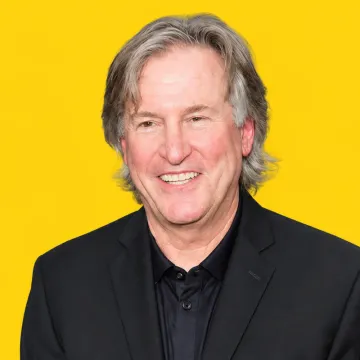
Jitendra Waral, Senior Research Analyst - Internet & Consumer Electronics at Bloomberg Intelligence
Jitendra Waral is Senior Research Analyst - Internet & Consumer Electronics at Bloomberg Intelligence. Jitendra has more than 15 years of experience covering the global technology sector including internet, consumer electronics, computer hardware, storage and electronics…


Guest
Jitendra Waral
Senior Research Analyst - Internet & Consumer Electronics at Bloomberg Intelligence
See full bio: Jitendra Waral
About Jitendra
- Was Senior Research Analyst for Internet and Consumer Electronics at Bloomberg Intelligence at the time of the interview.
- Has covered the global technology sector: internet, consumer electronics, hardware, storage and electronics manufacturing.
- Earlier worked at Deloitte, Gridstone Research and the Stock Holding Corporation of India.
- Holds a mechanical engineering degree from the University of Mumbai and a master’s in financial mathematics from Lehigh University.
Transcript
This is Silicon Valley Tech, Behind The Scenes, a podcast hosted by Shawn Flynn and Sunil S Ranka. Here's where we talk to the real heroes to find out how decisions are made and how they're executed to create the thriving businesses of tomorrow. And out of this $11.7 trillion before COVID, the penetration rate was moving at about 1% every single year. So we have about 12% of this total spending, this physical spending that's happening in the world, being online. If we look at what has happened over the last two months, that 1% became 2%. And what that did was it actually added an incremental $100 billion to the industry this year itself, on top of what the sort of the trend was before. So what we are seeing here is the pie is shrinking. You are seeing macroeconomic numbers. And that's actually causing the pie to shrink. But the slice of the pie, which is still at 14%. Here at the Silicon Valley Tech podcast, we are excited to finally be releasing this amazing episode that we recorded with Jitendra on May 8th of 2020. All right, now let's start the episode.
Jitendra, thank you for taking the time today to be on Silicon Valley Tech. Myself, Shawn Flynn, and my co-host, Sunil S Ranka. I mean, we have been big fans of yours for years, following you on Bloomberg, getting a ton of amazing advice. But can you tell our listeners a little bit about your background, your career that's led you up to this point? Thank you, Shawn and Sunil, for having me on. And I hope everybody's keeping safe out there. Yeah, so I've been really covering the space for a good 12 years now and then started right after my engineering back in India. I did mechanical engineering and sort of pivoted to finance in the final year, if you may. And I was fascinated by the industry and in the background, I've always been a tech nerd, geek, whatever have you. Selling theaters. You know, in the world of meat trucks and holographic cards and things like that back then. So moving to finance and then that sort of opened my eyes towards the technology world and more sure of that and finance. So I decided to pursue a master's. And after that, fortunately, I got an opportunity with Bloomberg to sort of like contribute and be a part of the research department that they were about to start. And basically covered hardware and networking storage over there. I had a piece post in the beginning. Did that work? Yeah, it worked. It worked for three years. Then we wanted to expand our research department with Bloomberg Intelligence.
We wanted to expand that to Asia, so I moved to Hong Kong, covering memory cell conductors, Apple supply chain, a few kinds of electronics companies in different parts of Asia and the West Front for three years, and then they wanted to expand in the West Coast. So I moved to San Francisco about four months ago and now I cover internet. So I cover all the fun companies in the world, Google, Facebook, Amazon, Snapchat, Twitter, Pinterest, the likes of those. And, you know, you can think about me as somebody who loves technology and loves to analyze business. That's fascinating. And I can totally relate to Jitendra coming from the same educational background from Mumbai University. And it's pretty fascinating to see the career progression, what you have made. With the brightest financial mind, you really get to analyze some of the most fascinating companies. Can you just tell our listeners right now with everything that is happening in the world, are the same model used by the analysts to take a look at the companies are going to be still viable? Or there is a fundamental change in the shift? It's evolving very, very rapidly. If you sort of like rewind back a month ago, it was changing every week, essentially. And if you look at all the earnings that just happened last week, most of them were better than here. And sort of some of that dynamic, even if the bigger pie, the economic pie shrinking, the slice of the pie started increasing because of that dynamic.
So the models have shifted very, very, rapidly. But the frequency of shifting was, I would say. A month ago, now that we have some more clarity, that frequency has gone down to month and hopefully it will normalize in a couple of quarters. But it's clear that this dynamic of wants becoming needs is going to reshape a lot of these companies and their strategies. So this is pretty interesting when we talk about want versus need. Can you just throw in some more light, any practical example that you have seen in the industry? E-commerce, for example, if you just sort of look at the online world in general. Yeah. About four years ago. Yeah. Yeah. Yeah. About four years ago, we had about 4 billion people online, out of which a good 75% of them are using Google or Facebook or one of these platforms every single month. And we saw a rapid spike in engagement across the board. And within e-commerce, suddenly we're going very slowly, like your food and groceries, some present to others. The penetration rate of people buying those kind of products online, health care products, supplies and things like that suddenly spiked up. Amazon's capacity shot up by 7%. And we're seeing that by 60% in groceries within a month. They ended up hiring 175,000 people to make this pivot happen by de-paritizing the prioritizing essentials.
So if you look at the world before COVID, we have about $11.7 trillion of retail market that Amazon could potentially target. And this is excluding China, including autos, restaurants, some of the things that are targeted yet. And out of this $11. 7 trillion, we have a lot of retail markets that are not even in the market yet. So if you look at the world before COVID, the penetration rate was moving at about 1% every single year. So we have about 12% of this total spending, this physical spending that's happening in the world online. If we look at what has happened over the last two months, so that 1% became 2%. And what that did was it actually added an incremental $100 billion to the industry this year itself, on top of what the sort of the trend was before. So what we are seeing here is the pie is. Shrinking. You are seeing macroeconomic numbers and that's actually causing the pie to shrink. But the slice of the pie, which is still at 13%, even after this big jump, even after this amazing story that we have played, being played in e-commerce and online for such a long time, that slice is getting support from some of the new habits. And if you look beyond e-commerce, if you look, why did Facebook suddenly surprise so much? And that's an interesting one because going into the quarter for Facebook, the expectation was a double digit decline.
I mean, in April and potentially the second quarter, but they came out with no decline. It was 0% growth in April. So that was a very big surprise. And why did that happen? Well, that happened because the legacy businesses were slowing from an advertising perspective. But this new demand that came from app downloads, people watching more content from home, e-commerce based advertising, e-fitness, online learning, all these other apps became needs very quickly. And they provided some support in terms of like the drag. And then the legacy businesses were facing. So that's the dynamic we are in. Some of these habits will probably return to normal and some of these habits were sick. Then that scale, that ratio is, I believe, is what's going to redefine the sector in the way we look at it. Wow. This is fascinating because in the midst of the pandemic, we all wanted that world is going to collapse. But after listening to some of the data, which you are very close to, this is pretty encouraging. So people keep comparing this situation with what happened in 2000. And so what are the lessons learned or what would be some of the things which business owners or entrepreneurs can look into and learn from that to try to avoid some decisions which could have been taken based on the data? It's a great question, Sunil. I don't think it's really comparable to 2008.
I don't really think it's comparable to any time in history that leads to the recent past, the recent recessions that we have seen. Because this is everybody's, the lockdowns, the world is on lockdown and a reset in many ways. So I don't think it's directly comparable. And I also don't think that the surge demand that we're seeing across the board in the internet space, it's not completely visible that how much of that will be sustainable. So the volatility will continue for this year. But I guess if you have to look at it from a technology perspective, there was something happening between all the macroeconomic uncertainty in 2008, which was under the hood, there were few products that were brewing that sort of define or redefine the space for the next decade. And the product was the iPhone and smartphones in general. In fact, in 2009, when stocks were tanking, the iPhone sales doubled. And if you sort of map the trajectory of the world after 2009, e-commerce, advertising, Airbnb, Uber, whatever services we're talking about happened because of proliferation of that product. So I guess one way to look at it is when we are amidst an uncertain time, like we are right now, our vision gets a little... It's a little clouded in terms of thinking long-term and beyond it.
So looking at underlying trends could really help sort of identify what are the opportunities you can align yourself with on the other side of the pandemic. At the same time, on the flip side of the equation, some of the companies also got disrupted, right? Like at the time, it was BlackBerry, it was Pia, Yahoo, eBay. So there was a wave of new demand being created, new industries being created, but at the same time, there were... There was also a wave of disruption that was happening for legacy business. I feel like one parallel, if you could draw, is looking at this drastic change in digital transformation that's happening in the industry right now, under the hood, might sort of pave the way for the next decade to see accelerated growth in some of the other businesses. If you look beyond the volatility we expect this year. So you said 2008, and you draw parallel to iPhone sales doubled. Now you said there is an opportunity... There is an opportunity to look under the hood with the whole digital transformation. What is that next iPhone-like product, what you envision, or what is iPhone-like service, what you envision would pick up? I think Satya Nadella out this really well in the earnings, and he said that we are seeing two years worth of digital transformation happening in two months.
So before COVID, and this is more towards the services side, Sunil, than the product side, if you may, but before COVID, you know, you needed convincing for the... The digitization from the boards to sort of spend more money, prioritize, or work from home tools or cloud transitions and, you know, cybersecurity, all those things. And now suddenly you don't have to convince anymore. Now it's become a requirement. A massive change in education is happening. Like e-learning was growing at a healthy pace, but we were expecting that thing to go mainstream probably a couple of years down the line. Now it's a need. Now you need it. You have to have it. So that's forceful change happening both on the buyer and the customer. So that's a forceful change. Both on the buyer. And the customer. And the seller, right? Even in the e-commerce world, if you look at it, the sellers were forced to sell online. So when Shopify, everybody was worried about Shopify in the beginning because, you know, they're exposed to a lot of small and medium businesses. But if you look the results, suddenly you're seeing them actually get more business from the small and medium sector from the sellers that never sold online or want to sell more online or are forced to sell more online. Now, if you align these trends with what some of the companies are saying, and this really is dependent on the duration of the lockdown and how much the macroeconomic impact is going to be in the second half. But if you look at what some of the companies are saying, they're indicating you could work from home for the rest of the year, essentially.
So that's why I think some of these habits are going to stay and it's going to cause an acceleration in aspects like cloud computing adoption, e-commerce. Obviously, we talked about the 14% penetration number. Payments. Live video. We're seeing a rapid increase in live video consumption. 800 million people on Facebook are using live video. Services in a very short period of time, augmented reality, e-fitness, online learning. So I feel like you align some of these habits and see this forced adoption and marry it with the timeline. The timeline is to the end of the year. And, you know, it was interesting. I was looking at how much time it really takes to perform new habits. And there were very numbers out there, right? Some say 21 days, some say two months, three months, whatever. But if you look at the most pessimistic expectation, if you may, it's still less than the time that we are. We're stuck in this uncertainty. So I think some of these habits will stay and it will create a new demand because of this accelerated adoption of technology. So, Jitendra, this is very fascinating. Some of the things what you are telling us being in the heart of the Silicon Valley, we are experiencing on a daily basis. One of the things, what I remember you saying is the past behavior doesn't go in the future retail habits. And you just talked about a behavioral change takes either 21 days theory or eight days theory.
Or it's going to change. It's going to be, you know, can you throw in some more lights? Sure. I'll give you a few examples over here. One is within the e-commerce segment. If you look at adoption rate of different types of products, groceries was a challenge because especially perishable goods, a big challenge because, you know. People wanted to sort of consume those products in a store. They had to pick and choose what they want to buy. And now with all the sort of lockdowns forcing you to rely more on online. At least people are getting to experiment these things. Now, some of them would actually stay. And even if some of them stay, that's still a big chunk because this is a 900 billion dollar market that only has four to five percent penetration rate. That means only four to five per cent of that 900 billion market is being sold online. So you're going to see sort of a step change happening in that category. Furniture. We're seeing something similar happening over there as well. So health care, telemedicine. So there have been some instances where. You know, the pace of growth was linear, gradual, predictable, strong, but still away from mainstream adoption. Now suddenly you open that door. The second example is the cloud thing that you talked about. Now, within cloud, if you look at the market, you know, it's about two hundred and thirty billion dollar market, give or take globally.
Against that, IT spending is two trillion. So, again, we're talking about the world which is still not completely digitized far, far, far away from it. And this forced adoption. And this forced adoption is basically giving people opportunity to experience new product categories. And I think online education is a great example. Google has a hundred million students and schools participating with their G Suite products in education in a very short period of time. Now, they're not going to make much money out of that this year, really. But it's basically exposing the audiences to these new technologies that were in a way sitting dormant for a very long time. And suddenly they woke up. So what are you going to end up seeing is this year is going to be a learning year for a lot of technology companies, learning here from the behavior that's happening and then figure out the monetization after that. And that's why these companies are going to look a lot different, really, on the other side of the pandemic. Great insight. Now, just as we are in the midst of a decision making, how these are CEO of the company or a decision maker in the company and how does this process have changed? Between the past pre-Covid era versus the post-Covida era? Drastically.
It's like turning a monster ship very quickly in a different direction. And the best example is, and there are several across the board in large tech, but Amazon hiring 175,000 more people to serve this increased demand in about a month's time. Doing that, they are deprioritizing all their essential items, which was basically majority of their revenues and shifted completely towards. Essentials. And that shift is a very big one. And to do that in the sort of the timeframe that we're talking about, a couple of weeks, they have to essentially throw the playbook out of what the business plan was for the year. And henceforth, same thing with Google, with their cloud services, with their G Suite adoption, same thing with Facebook, with, you know, changing adoption rate on services like WhatsApp and live streaming video, scale those businesses very quickly. So everybody was essentially, you know. Making sure that they were doing it right. So how do we scale what we have right now to solve the need of the time within a few weeks? And I don't think any one of them have gone through such an exercise before in the history of the existence. So I think the decision making really tested and is currently testing their ability to scale something that they thought or planned years to take in weeks.
And I think that decision making process goes back to the point that I made earlier, that this year is going to be. A volatile because of that dynamic of, you know, as you move into these new directions, revenues, profits would have a piece of effect as you figure out what works, what doesn't work. But at the same time, they are walking out of the pandemic. There are two things that will happen. These companies will have higher user base with new habits on one hand and an infrastructure which has tested to scale against that background on the other hand. So when you marry the two, now you're setting it up for a brighter, much, much bigger landscape. For these companies, so the destination is bright, but the journey is going to be difficult. So Chitendra, if I am a company who's on the receiving side, which means I'm a small business or I'm a mid business and I'm very used to the culture of I have known the culture of Azure in terms of cloud computing, Google, Facebook. If you have an advice that how do I look at some of the services, what is available today and what would be key for me and what are the general trends what you've seen? So there are a lot of companies within certain segments that are going through a lot of pain like travel, automotive, and they're trying to, again, figure out how do we prioritize or be prepared for recovery.
And in that sense, like I feel scalability of new solutions becomes very important because either you are in the process of scaling a new demand right now or you're in this holding period of getting ready to scale. New demand, couple of months, hopefully down the road or becomes a couple of quarters. So scalability becomes sort of the number one priority for choosing services that you want. And you have to also marry the scalability with possibility about remote working being part of the process for a longer period of time. So I think what companies will look at are the smaller companies that you're talking about. They will look at the comprehensiveness of suites they are getting from different companies, whether it be Microsoft, where, you know, you would get cloud solutions, you would also get Teams and or Google where you'll get Hangout Meets, you'll also get the cloud services or AWS. So I think it's going to be a function of scalability and the tools that you're going to need to either respond to the demand that you are facing right now or prepare for the demand that we will in hopefully a couple of quarters, if not months. Harpreet Sahota- Interesting. So what you're saying is the companies are going to more look towards the productivity gate tools. And people are going to look more from the efficiency related tools.
And then that's how they will move more towards a cloud offering. Is that understanding correct? So we are in normal times. And from your experience analyzing companies, what does a company decide to start focus on more profitability and less on sales and growth? So what would be the right approach, profitability or sales growth? That's a great question. And I don't think profitability is the focus for any of the internet companies. Really, because even if they are not really making money from most of this engagement, you know, maybe WhatsApp or Facebook at the moment, or with Google's G Suite, you know the free Hangouts Meet or the free Google Stadia gaming, their pitching or any of those things, I think they are making sure that the needs of the time is served first, and that will pave the way for a faster future growth later on down the line. So I think it's profitability. Is not priority. And frankly, it cannot be. I mean, you saw Amazon's results. They came out with a blowout number on the e-commerce top line side. But when it came to the profit, I mean, there was a big dip there and a big miss for the second quarter because, you know, logistics is becoming more and more complex.
There is yes, there's so much demand coming from the top line, but their ability to serve is restricted by, you know the safety precautions they have to take. They have to make sure that while they are. Dealing this network to deliver more products, we are taking, you know, a lot of steps to clean the logistics facilities and add additional steps to minimize the impact as much as possible. So I feel like if you look at the dynamic right now, there's no reason why any company should focus on profits. So that's the more the longer term viewers and Jeff Bezos has said this multiple times overnight successes at Amazon take eight to 10 years. And if you sort of like, look at history of Amazon overnight successes, maybe AWS or a lot of other things. Yeah. Yeah. Yeah. Yeah. Yeah. Yeah. Yeah. Yeah. Yeah. Yeah. Yeah. Yeah. Yeah. Yeah. Yeah. Yeah.
Does that make sense? companies will look different coming out of the pandemic. That's what's going to drive their investment decisions. So, I mean, in a nutshell, it's not going to be about profit. I just loved it when you quoted Jeff Bezos. This reminded me from the movie Founders that we are an overnight sensation, 23 years in making. So it absolutely does make sense. You've been working a lot with the internet companies in the ahead of curve and what I call it, not leading edge, but the bleeding edge. And we all keep hearing automation and AI is going to define the world and a lot of jobs are going to get automated. With this COVID-19, what are some of those jobs which got accelerated mode or need for automation? That's a great question, Sunil. We don't know the answer yet. We just have a couple of weeks of data, you may. So we'll just take some cues from what we have seen so far. So one thing is for sure that with increased adoption of digital transformation or digital transformation, sort of hitting a fast forward button, the amount of data you're going to deal with, an average enterprise is going to deal with, if it's going exponentially, it's going to explode even more to a level where we can't keep up with it. And I feel like instead of being a focus on replacing of jobs, at least in the near term, the focus is going to be more about how do we handle scaling of this fast forward button that the world has just hit on digital transformation.
So I feel it's less soft. It's a jobs impact immediate term and more of a how do we use machine learning to really scale into some of these businesses, maybe payments or maybe commerce or streaming or cloud gaming or augmented reality or whatever have you. But when you're scaling so rapidly, scaling with people is going to be slow and hard. And the amount of data you're going to deal with is going to demand forced adoption of machine learning and AI. So you will see as an impact on this and accelerated adoption. Again, that want becoming a need, because it will be a need of scaling. Harpreet Sahota- I just love it when you say want becoming a need and it would need scaling. Now, taking a little bit diversion from the conversation, based on the recent change, even though we are only in the ninth week of pandemic, what will e-commerce look like three to five years from now? That's a great question. Again, we're going through some of the cues that we have so far, so not all of these habits will stick. Some of them will, but essentially what you're going to end up seeing is businesses that were slow in adoption of e-commerce never got to experiment really what the impact on their revenues and growth could look like.
And now they're beginning to see those. Some of these businesses will actually accelerate that adoption. So what we see happening essentially is e-commerce today is roughly $1.5 trillion. This is excluding China. And if you look at the... The growth that was happening before COVID, it was double digits, 12 to 13% against that very high base. So that growth will accelerate in 2020 and what we thought e-commerce would be five years from now pre-COVID is probably going to be a couple of years in advance. In fact, in 2018, we had sort of analyzed Amazon's business from e-commerce perspective, looking at global GDP and sort of like doing a top down analysis, and we had projected that Amazon will sell more. More than $1 trillion worth of gross sales products by 2025. What we are seeing happening, at least in the last couple of weeks and months, that adoption rate is much, much faster in a very short period of time. So they might do it sooner because of that. So I feel like the world of e-commerce is going to look bigger than what people thought in three to five years. But also there'll be new players in the market. You know, we're seeing Google pivot through e-commerce aggressively.
We're seeing Facebook pivot. We're seeing Facebook, you know, rebooting Libra. There's an e-commerce bent to that. They just invested $5.7 billion in India's Reliance Jio with WhatsApp being integrated into the sort of e-commerce strategy over there with Geomarkt connecting small businesses, enabling payments, enabling online purchases and henceforth. And Instagram shopping is also another area where Facebook is investing aggressively. So I feel you will see a bigger market, but also you'll see new players. In fact, I firmly believe that Facebook's future is going to be much, much better. Facebook's future will be much, mucho mejor. Facebook's future. Facebook's future, much, much, mucho mas. Facebook's future If you look at Facebook's business today, it's 98% advertising. And if you look at the growth expectations for the next five years, it's more or less bent towards that, that it'll be an ad-heavy company. But I feel that because of COVID and because of ongoing regulation, regulatory pressure on user-generated content in general, which is not going away, it's going to force them to diversify the business. The future of Facebook is not advertising. The future of the Facebook is probably e-commerce, payments, augmented reality. The future of the Facebook is probably e-commerce, payments, augmented reality. The future of Facebook is probably cloud solutions, cloud gaming. And those are the things that you'll see investments go up in. And those are things that will redefine some of these companies. So you will see the market being bigger, but also there'll be new players that you did not anticipate will play a bigger role in that market.
Thank you so much, Jitendra. It was really insightful. And it's been a pleasure talking to you. We really appreciate your time. And we are looking forward to this relationship. And what we'll do is, once again, thank you so much for everything. Thank you so many. Thank you for having me on. Jitendra, one last question for you. If anyone wants to find out more information about you or what you're working on, what's the best way to go about doing that? Yes. So BI on Bloomberg Terminal is basically where we publish all our research on. So if you have a terminal, not just me, we have more than 300 research professionals globally publishing content on industry trends and companies. So if you're on the terminal, BI Go would be the function. And outside of that, if you want to connect with me, happy to do so. I'm Lee. Bloomberg Intelligence is Bloomberg's in-house research department. We have more than 300 research professionals globally. And we look at companies and industry trends, but also have this unique viewpoint from having credit analysts, litigation analysts, government analysts. So it sort of helps us get a holistic view of the trends that are emerging in the marketplace. Thank you for listening to Silicon Valley Tech Behind the Scenes. To find out more, contact the team or to be a guest on the show. Visit our website at siliconvalleytechpodcasts.com.
We look forward to hearing from you. And remember to support the show by leaving a review to encourage us to keep creating great content like this.
Interview of Jitendra Waral, Senior Research Analyst - Internet & Consumer Electronics at Bloomberg Intelligence
Jitendra Waral is Senior Research Analyst - Internet & Consumer Electronics at Bloomberg Intelligence. Jitendra has more than 15 years of experience covering the global technology sector including internet, consumer electronics, computer hardware, storage and electronics manufacturing. Prior to joining Bloomberg, Jitendra worked in options pricing and software sector research at Deloitte, Gridstone Research and the Stock Holding Corporation of India. Jitendra holds a bachelor’s degree in mechanical engineering from the University of Mumbai and a master of science in financial mathematics from Lehigh University, Pennsylvania.
In this episode we talked about:
- The experience of analyzing some of the most fascinating companies where everyone dream to work. The models that used by the analyst to look at these companies.
- Lessons from 2008 or another time in history that business owners or entrepreneurs can look at and learn from to try to make current business decisions.
- Talking about “The past behavior doesn’t govern the future retail habits”.
- How will the e-commerce look like 3-5 years from now.
- New learning from COVID and the impact of change
Help us reach new listeners by leaving us a rating and review! It takes less than 30 seconds and really helps our show grow, which allows us to bring on even better guests for you all! Thank you – we really appreciate it!
Learn more about Jitendra Waral:
Follow Silicon Valley Tech Podcast on:
Contact Us: (650) 701-3468 / info@svtechpodcast.com
About Hosts:
Latest episodes
-
Part 2 - Interview of Wendy Fitzwilliam
Wendy Fitzwilliam, Miss Universe 1998 and former UN Goodwill Ambassador
-
Part 1 - Interview of Wendy Fitzwilliam
Wendy Fitzwilliam, Miss Universe 1998 and former UN Goodwill Ambassador
-
Interview of Larry Kesslin, Chief Connector at SPIRE
Larry Kesslin, Chief Connector at SPIRE
-
Part 2 - Interview of Prem Jain, CEO at Pensando Systems
Prem Jain, CEO at Pensando Systems
-
Part 2 - Interview of David Womark, an American Film Producer
David Womark, an American Film Producer
-
Interview of Lou Pambianco - Chairman and CEO of Startup Sandbox and Managing Director of Corporate Development Partners
Lou Pambianco, Chairman and CEO of Startup Sandbox and Managing Director of Corporate Development Partners
-
Part 1- Interview of David Womark, an American Film Producer
David Womark, an American Film Producer
-
Interview of Nigel G. Salina - An International Consultant, Philanthropist, Public Speaker, Entrepreneur
Nigel G. Salina, An International Consultant, Philanthropist, Public Speaker, Entrepreneur