The Silicon Valley Tech Podcast |
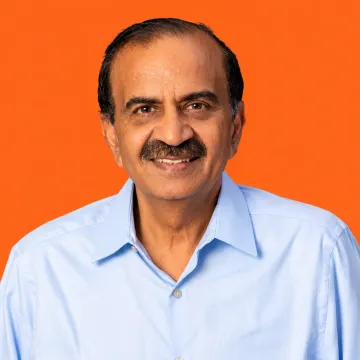
Part 1: Interview of Prem Jain, CEO at Pensando Systems
Prem Jain, CEO at Pensando Systems
Prem Jain is currently CEO at Pensando Systems. Previously at Cisco for +20 years, Prem developed and honed many key innovations that helped the company evolve, including Routing & Switching capabilities and Software Defined Networks Most recently served as SVP / General Manager…


About Prem
- Co-founded Pensando Systems in 2017 and was its CEO at the time of the interview.
- AMD completed its acquisition of Pensando in May 2022, valued at about $1.9 billion.
- Spent more than 20 years at Cisco, including as SVP and General Manager of a business unit.
- Part of the founding teams of Cisco spin-ins Andiamo Systems, Nuova Systems and Insieme Networks; was CEO of Insieme.
- Worked at Crescendo, which Cisco acquired, before joining Cisco.
Transcript
This is Silicon Valley Tech, Behind The Scenes, a podcast hosted by Shawn Flynn and Sunil S Ranka. Here's where we talk to the real heroes to find out how decisions are made and how they're executed to create the thriving businesses of tomorrow. You know, you can achieve or you can do certain things. I think to me is the most important thing which I found works is one is the time management. You need to really know the time management is very important that, you know, you have to be very efficient because if you want to do certain things. Second thing is, I found is that what you like to do, you always have time. It's very, very important because if you are doing it just for sake of doing it, okay, forget it. I'm not going to do it. I'm not doing it from my heart. So I think it has to come from your heart, whatever you're doing it. Third is you need to balance between the family and everything else that you do. And that was Prem Jain, who is the founder and CEO of Pensando Systems. Prem has not sold one, but has sold multiple companies to Cisco. On today's episode, we dive into how does one equally contribute to the local community and educational institutions? How do you strike a balance? We talk about some people think Silicon Valley is a young man's game.
What's it like to start a company at age 60 that is expected to be the next big thing? This and much more in today's episode. So let's dive right in and start now. Enjoy. Welcome to Silicon Valley Tech. Now, today's show, we have a special guest for you, Prem Jain. Now, what's so special about this guy is I did not know this until a moment ago. Sunil S. Ranka, my co-host on this show, actually refers to him as uncle. Slips up in this episode. Don't be too surprised. I mean, the connections, the bond, they're there. But Prem, I just have to start off with one question for you. What was it like growing up in India? And was there any experiences there that helped shape who you are today?
Sean, it's a very good question. And I'll tell you, there's a lot of things which happened while I was growing up in India, which really I'm proud that I learned from those things and I'm using it even today. To give you an example, I grew up in a business family in Delhi, in old Delhi, in Chandni Chowk, which is the heart of Delhi, if somebody knows where Delhi is. My parents, they were in a business of selling turbans. And, you know, turbans is the one which is used to cover your head. They used to sell in the kingdom. You know, the kingdoms, you know, where the king used to buy the turban and they don't wear the same turban next day. It was a very lucrative business. And it was going on until India became independent. And obviously they had to make a transformation, selling to different segments of the market. It was a wholesale business. They were the only game in the town. So that was good because they can sell turbans and turbans use silver and gold. But because of the transition, that's the thing which is I realized the transitions, they had to transfer into a different business and that business, they didn't know anything about it. And my father basically made the transition to sell a sarees, which is the Indian ladies they wore. And I realized I was, you know, 13, 14 years old and I used to help quite a bit in the business.
And I realized that that is not their cup of tea because they used to sell the wholesale market. And we are now going to a consumer market, decorate the shops and people come in the house. And in our shop was in the house itself. So which is entirely a different experience that I learned that the transitions cannot be done very easily. If you're not really understood what business you are getting. Second thing, which was interesting also during when I was growing up in India was our family is very religious. We follow very thoroughly practice and stuff like that. And one of the things which is learned out of this is that you have to have whatever value you have. You have to practice in it. And I noticed my family business. Sometimes they cross the line. And I always used to question it. I said, why are we doing this? Because we used to have a Muslim community used to come and sell us this stuff. And they used to have separate plates, separate water, separate things like discrimination. You want to think about it. And I've never really, I had a friend who's a Muslim and used to come to my house. I never told even my parents that he's a Muslim. Just to make sure it does not discrimination. So that's another thing, which was a big thing for me. And the third thing, which is really very interesting was. I went for a hitchhike and, you know, during those days, this is, I'm talking about 68, 69 timeframe.
I went to Europe from India and India won't allow you to go to Pakistan. And so that was a big risk. I took, people said, you're going crazy. You're nuts. You don't understand what is hitchhiking means. So I took that risk and I said, look, I'm a vegetarian. It's very difficult because you don't know what you're going to see. There is a language trouble, which is even to have your faces, all different kinds of people. I was only 17 years old. At that particular time and hitchhiking was not that famous word in India. People don't know what I really meant. So they thought that I'd gone berserk and I need some help from the other people. Good thing is I learned quite a bit after getting out of the country, talking to different people in different countries. And I did this all my 40 years of college, which I went in BITS planning campus. It's one of the kind of IITs of India. And I learned quite a bit out of this hitchhiking experience. Yeah. And I'll tell you, in majority of the cases, I spent zero from my pocket. I went and worked in Europe. I earned the money and I got it back. A lot of learning that you can survive, you know, in this particular hostile environment, because you don't know anybody. And there was no phone calls. There was no cell phone. There was only way you communicate to the families through the letter. So sounds like the key ingredient of Silicon Valley, bootstrapping, cultural differences, transition or pivot.
You learned that very early on. So, Prem, can you just a little bit more about your journey in Silicon Valley? Yes. So after I graduated from India, I came here to do my master's at UC Davis. And that was a I came here actually to not to do my masters, but also do my Ph.D. I thought I will go in teaching. That was my objective when I came down here. When I went to UC Davis, I was my professor, Luman, who was my advisor. I was sitting in his office and he got the phone. I got a phone call from a company called BNR and he said, you know, he was looking at me and talking to this person and he says, You know, I have somebody sitting next to me. You might be interested in talking to him. And that happened to be the job interview with a company called Bell Northern Research. And I was not interested in doing I was actually just applied for Ph.D. program. I did my master's. I graduated from my degree and I was going and applying for Ph. D. programs. And suddenly this call comes to my professors and I go. And. After them, I had no resume or nothing. I told them that, look, I didn't prepare anything. They said, don't worry about it. They interview me. What happened is my thesis was written on microprocessor, the use of microprocessors. And Intel was just coming out.
This is now we are talking about in 1977 time frame. Exactly. The Intel just came out for a low end microprocessors. And I wrote my thesis, basically, how can you use it to build a system, multiple different dimensions. So this company really liked what I was doing. And I passed the interview. They called me the factory interview. And here's my first job. I had to drop my Ph.D. program. My professor told me, go and work for one year. Don't worry about it. You know, you can come back. It'll be a good experience for you. Well, guess what? It never went back. Just like a classic Silicon Valley. I worked for this company. And that's where I started the journey in Silicon Valley. And just to give you a little bit more, I worked there for BNR for seven years. Learned a lot. It was a part of Northern Telecom. It was BNR stands for Bell Northern Research, which was Bell, Canada, Northern Telecom and their arm. And I really enjoyed it because they used to call us the farmhouse because we were very close to Stanford Farm in Palo Alto. So it was very interesting experience there. I learned quite a bit because, again, in my life, I was always looking for transition. That transition going into BNR was from analog voice to digital voice. And that was a great experience because they were in the forefront of it at that particular moment.
And I learned quite a bit. And then right after that, we started a startup company, which is called David System. David is an acronym, which is distributed system for voice, image and data. That's David stands for. David was nobody's name. A lot of people used to ask. And then there was a David versus Goliath became because we were doing a PBX and you know who was the top company of doing the PBX at that time was AT&T. And then they diverged into a bunch of Bell, Illinois Bell and, you know, Pacific Bell and all those. So now it's back to the AT&T. You know, the life is, I call it a deal of reincarnation. You know, what that really means is that you started at one particular point and you come back again and you're reborn. But at a different point, it's not exactly the same point. And the reason I'm telling you this is very important for anybody to understand that we go always in the system design. Centralized. Distributed. Somewhere down the road, every time you come back from centralized to distributed, it's entirely different place. It's not the same point. So for example, you know, centralized computing, mainframes and stuff like that. We went to a distributed computing, which went into, you know like DEC or, you know Sun Microsystems and stuff like that, again went to totally distributed, which is became the scale out model where now you're using the Intel x86 and stuff like that.
So this cycle continues. So I learned quite a bit while, you know, working on this particular environment and started the company, David Systems, which was really very interesting because we were fighting against, you know big companies like Siemens at that particular time or Rome Systems, which is doing this and others, and that was a great experience for me, even though David didn't succeed, we got the best venture capitalist people to fund us. And that's where I met Mario and Luca, who is now a part of the MPLS team, which is Mario Payne, Luca and Sony. Mario, Luca and myself, we are working together since 1983 as a part of David Systems. David was funded by the top venture companies in the Valley, which is Sequoia Capital, Mayfield, you just name it. They were very, very top. They poured so much money. We felt so bad that because it didn't succeed. But I learned quite a bit less. And I want to tell the audience two things, which I learned. Technology is not sufficient to sell the product. You need to really understand the market and the need in the market. We were just carried away with our technologies that we want to integrate voice video data into one single platform.
Guess what? We found out there is no, the organizations are not structured to buy the product for this kind of usage. Voice group was separate. Data. Group was separate. Video group was totally separate. They don't even talk to each other except at the CIO level. And the product was not cost effective to sell into one particular segment of the market. Otherwise we'll be very successful. It was very cost effective to use altogether. So that was another thing that you learned that it was a little bit too early for his time, you know, and that is something I think people have to realize you have to be just in time. And that's a big lesson, spending a lot of money of the venture capitalists, but you know, good party venture capitalists. Really like this, they funded it again, the company that funded was called crescendo and crescendo was the one where the, we decided to look at it. What can we do in the switching area? And we build a switch, which is then Cisco acquired, that was the first company Cisco acquired. And by the way, that became 15, $16 billion business per year for Cisco. That was an amazing journey we had after what we did in crescendo. And, uh, even though. Cisco paid us, you know, a hundred million less than a hundred million, but we really enjoyed it.
What we were doing in the next 10 years, you know? We really enjoyed part of this and the growth, which we saw and the biggest satisfaction, obviously any entrepreneur and anybody will get is not just making money. You know, or fame or whatever it is to see the impact in the industry. And that was the biggest impact we saw we created. And, you know you can count in 10 years. If you're. Selling that big, you know, that's a lot of billions of dollars, tens of billions of. Dollars and put Cisco into the map after they were doing it outing. And now we, we started doing the switching. So that is, that's where we got into Cisco. Then we got another term in the Silicon Valley is Cisco wanted to do some, get into the adjacent technology. Okay. So we said, fine, we'll work into it. So we started a company called Indiamo. Now you will see all these words are Italian word, you know? Crescendo. Indiamo. The next one, which we did with Cisco was NOA, which means new it's again, Italian word. Next one we did is called in CMA, which is mean altogether. And all they were looking at the adjacent technologies. The first one was taking Cisco into the SAN storage area network. Second one is taking the Cisco into the server business, which has a lot of people told us, you guys are crazy. What are you trying to do?
There are several companies. You don't even know how to spell server compared to the server companies like HP, like IBM. Microsystems and stuff like that. And reality wise, they were correct. You had no experience with server. We didn't even know what the BIOS is. So that was in NOA, which became again, a spin in spin out the Cisco and very successful. That business is right now is about $4 billion. The business of Indiamo when we left is, was about a half billion dollars. That was a storage area network. Then we started another company called in CMA. In CMA was basically supposed to do the STN. Now again, all these. These are the freedom we got out of working in and out of Cisco to create a new environment. And in CMA allowed us to deliver SDN capability, which is the software defined networking capability. And that was a great experience, which we had. And that business is today is almost three to three and a half billion dollars. So we had a really tremendous run. You know, and I don't think when we started this particular thing in Silicon Valley that we will be doing these kinds of things. And like, I was telling you before, I want you to be a teacher. And then you look at it as somebody who wants to be a teacher and now running into this businesses. And the other interesting thing came out of it is that right after we are done with the in CMA, we thought we were going to retire.
But you know, that, that doesn't stop there. We, four of us got together. He says, we still have a few more years left. Look at another transition. And that transition is really was in Sando, which is, we will talk about some more. But one thing I want to tell you, which is very interesting. All these names, which I mentioned to you, if you combine together and put it in a particular order, it will tell you, let's go all together to a new high. And now with the new thinking, so it's really very interesting. It's just a coincidence. I don't think it was planned. This is just beautiful. Sean, and for the other listeners, just so you guys know, the University of California, Davis has received 1.5 million gift towards frame Jane family for the president. Chair of innovation. So he never talks about it very openly, but I just wanted to put this out here because knowing him for many years is one of the most humble person I've met. And you will, and listeners, you will get to know him a little bit more better. So yeah, Sean, it's all yours. Well, first off Prem, you're also the greatest storyteller ever. I'm looking at this going, I have 20 questions for you from right there. First ones that come to mind, you mentioned centralized, decentralized, where do you see us right now in that cycle? And where do you see us in the future with that?
And then also how crazy is it that all the companies you've created, one, the Italian phrase there, almost like it was fate that you're going to build all these companies and two, to have that much impact on the world and Cisco. I know there's a lot of questions there, but first off, where are we in the cycle? In the cycle, if you look at it, we are in a distributed world now. Distributed and parallel processing. Those are the two things. Which is we are doing. Okay. We used to do centralized processing and then cluster of processing. And now we are doing parallel processing, which is happening for artificial intelligence, machine learning. So this cycle will continue. I think this centralized or distributed, I think that will continue. I don't think the journey ever finishes as far as I see it, because you look at this way, it's better to do the work in a distributed fashion, but much easier to manage if I manage central. So this is a new paradigm, which is going to come much more and more. Is how do I manage all these millions of devices, the IOT devices, say for example, how do I manage all those devices in a very cohesive manner so they can coordinate with each other? The other new paradigm is occurring. Also, it looked at about the drones or the automatic car, which is going to happen, right?
Who can't need to talk to the other car so I can protect the other car. So it's not only going to be a distributed management also for those devices. They need to understand how far I am from the other one. I don't hit each other. So there is a new paradigm. Okay. There is a lot of opportunities that is coming in front of us from this learning, I think, which is we are talking about. Now, in terms of the success, I don't think we ever thought about when we started any of these ventures, we wanted to make it successful because we would like to see the impact in the industry, but never thought that this will grow that big. First one was switching. I mean, people used to say, it's okay. It's only $2 billion market, but you know, the beauty of that is, is that you keep on adding stuff to it. It's not like you stop. So we've got a lot of stuff into this. So we've got a lot of stuff into this. We've got a whole bunch of stuff into switching technologies. And there were a lot of other technologies which were competing with switching technologies. We make sure that, you know, we can all bring them together. And one of the example I'll give you is ATM. ATM was very popular. You know, the mode of competing against ethernet. There was a technologies, which was getting a lot of momentum. You know, adapter cards was coming in. Instead of ethernet, you put ATM card and stuff like that. We brought all those capabilities into ethernet. So what ethernet was invented by Xerox and Intel. And that, and the spec came out in 1978, is not the same ethernet.
Only world remained the same. It's just called ethernet. Underneath everything is changed. It's not collision detection, CSMA, CD, what it was at that particular time. So it's really amazing. I think is the main thing is that for people, for the audience, I think it's important to understand what is going on in the industry and really catch the wave and don't leave yourself behind. Because if you left yourself behind, you will be totally out. Is an industry. Goal standard for innovation and success. And for the listener MPL stands for Mark, Prem, Lucas and Sony. How did this partnership begin? It's a very interesting question. And I'll tell you, I think Mario, Luca and myself, we met first time in 1983. Okay. As a part of the David systems. So David system was a startup, which is Mario was the VP of engineering. Luca and myself. We were directed and working together. And, uh, like I said, that company didn't succeed, but we learned quite a bit out of it and generated a lot of respect for each other and the next one, we wanted to start it all together again, even though that particular company didn't succeed. So that's where Mario, Luca, myself, we met just to give you a little bit of historical background. Mario, Luca used to work for like Olivetti.
I used to work with BNR and there was a partnership between the Olivetti and BNR to develop a joint PB act for the Italian market. Olivetti, Olivetti, you remember very popular for typing business typewriters. They were making a transition from typewriters to the PCs and then PCs to the PBX. They already have a partnership with the Northern Telecom to sell their SL1 switches in Rome in Italy. So that's where we met in the beginning when I was in BNR and Mario and Luca, they were in Olivetti. And then we decided to start this company called David systems. And, uh, that's where the three of us. We met. And then after that Crescendo, Mario, Luca, and myself, we were all three founders of that particular company. Uh, when we started this in 1989, Sony came to us as a part, when Cisco acquired Crescendo in Cisco, Sony joined us. I think she was working for, uh, the name is not coming to my head, but one of the startups in the Valley, she worked there and then she joined us at that particular time. Since then. We were working together, as you know, very well, when you create a small business and the business is growing, like from, you know, a hundred million to billions and billions and billions, people start looking at and start recognizing you and stuff like that.
The term MPLS came from is basically was a technologies, which is we were developing. It's called multi-protocol level switching MPLS. That was the contribution we made to make sure that that particular protocols is being. Is being used for the service provider space for building a very, very large networks for the service providers. And I was actually part of working with the team to driving it. I was a manager and Cisco director actually drive that particular part of the technology. So the MPLS was associated with us in that particular sense. And then when we started the Indiamo and made the Indiamo very successful, Sony was part of it, Mario, Luca, myself, and Sony were part of it. And then it became even more popular when we started. The. Nova was a server company, which is, we, we started in 2005 and became very successful. And we left Nova in 2011 when we started the in CMA. So our relationship is started with this startups and it's very successful. We compliment each other. Okay. You can think about it. A person has a heart brain, you know, eyes and the hand look that way. So we represent that particular part of. The MPLS in that particular sense, you know, Mario is the very sharp in terms of coming up with ideas and with the thing, Luca is very good in execution.
Also, they consider me as a heart and Sony is our hands to help it out to sell it. And that concludes part one of our two part episode series with Prem J. Now stay tuned for next week as we talk about what is JNism and how can one strike the balance of work and personal life? What is Passando? A highly talked about startup company. Startup in Silicon Valley and much more, and don't forget to like subscribe and share with your network. And that encourages us to create great content like this. All right. We'll see you next week.
Thank you for listening to Silicon Valley tech behind the scenes to find out more, contact the team or to be a guest on the show. Visit our website at Silicon Valley tech podcasts.com. We look forward to hearing from you and remember to support the show by leaving a review to encourage us to. Keep creating great content like this.
Part 1: Interview of Prem Jain, CEO at Pensando Systems
Prem Jain is currently CEO at Pensando Systems. Previously at Cisco for +20 years, Prem developed and honed many key innovations that helped the company evolve, including Routing & Switching capabilities and Software Defined Networks
Most recently served as SVP / General Manager of Cisco INSBU.
Co-founder and part of the unprecedented spin-in team for Andiamo Systems, Nuova Systems (CFO) and Insieme Networks (CEO), which were acquired for an aggregate amount >$2bn
Prior to Cisco, worked at Crescendo Systems (acquired by Cisco) and David Systems
In Education, Prem Jain did B. Tech in EE from Birla Institute of Technology (BITS Pilani) one of the premium institutes of India & after that did M.S. in EECS from UC Davis
He is a great business leader, who has equally contributed to the local community and education institute.
In this interview we talked about:
- Prem’s journey from handling his family business in India, aim to become a teacher to becoming founders of companies in Silicon Valley?
- Prem shared about changing the philosophy, changing notion within the industry, catching the wave, journey of creating the most talked startup in Silicon Valley with John Chambers as chairman of the board.
- Silicon Valley and startups are all about taking a new risk and favors young blood, how to be always motivated.
- Key ingredient of Silicon Valley bootstrapping, cultural differences transition or pivot, learning experience of Prem.
- Being a business leader, equally contributing to the local communities and education institutions, how did he strike this balance?
- Word of wisdom to leaders and building entrepreneurs, how the decisions are made to implement things in the future & plan in the business.
Help us reach new listeners by leaving us a rating and review! It takes less than 30 seconds and really helps our show grow, which allows us to bring on even better guests for you all! Thank you – we really appreciate it!
Learn more about Prem Jain
Twitter: @prem_jain2
Follow Silicon Valley Tech Podcast on:
Contact Us: (650) 701-3468 / info@svtechpodcast.com
About Hosts:
Latest episodes
-
Part 2 - Interview of Wendy Fitzwilliam
Wendy Fitzwilliam, Miss Universe 1998 and former UN Goodwill Ambassador
-
Part 1 - Interview of Wendy Fitzwilliam
Wendy Fitzwilliam, Miss Universe 1998 and former UN Goodwill Ambassador
-
Interview of Larry Kesslin, Chief Connector at SPIRE
Larry Kesslin, Chief Connector at SPIRE
-
Part 2 - Interview of Prem Jain, CEO at Pensando Systems
Prem Jain, CEO at Pensando Systems
-
Part 2 - Interview of David Womark, an American Film Producer
David Womark, an American Film Producer
-
Interview of Lou Pambianco - Chairman and CEO of Startup Sandbox and Managing Director of Corporate Development Partners
Lou Pambianco, Chairman and CEO of Startup Sandbox and Managing Director of Corporate Development Partners
-
Part 1- Interview of David Womark, an American Film Producer
David Womark, an American Film Producer
-
Interview of Jitendra Waral, Senior Research Analyst - Internet & Consumer Electronics at Bloomberg Intelligence
Jitendra Waral, Senior Research Analyst - Internet & Consumer Electronics at Bloomberg Intelligence