The Silicon Valley Tech Podcast |
Part 1 - Interview of Rushabh Parmani, Co-Founder & Executive Vice President at Automation Anywhere
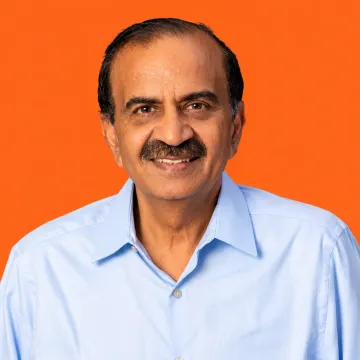
Rushabh Parmani, Co-Founder & Executive Vice President at Automation Anywhere
Rushabh is currently Co-Founder & Executive Vice President, Customer Success & Operations at Automation Anywhere. At Automation Anywhere, these people perform repetitive manual tasks by making end to end business processes more efficient and productive. They have built the…


Guest
Rushabh Parmani
Co-Founder & Executive Vice President at Automation Anywhere
See full bio: Rushabh Parmani
About Rushabh
- Co-founded Automation Anywhere in 2003 in San Jose, originally named Tethys Solutions.
- Was Co-Founder and Executive Vice President at the time of the interview.
- Has led product development, sales, customer support and professional services at the company.
- Began his career as a software engineer at Siebel Systems.
Transcript
This is Silicon Valley Tech, Behind The Scenes, a podcast hosted by Shawn Flynn and Sunil S Ranka. Here's where we talk to the real heroes to find out how decisions are made and how they're executed to create the thriving businesses of tomorrow. So first and foremost, being a CXO in an organization and thinking automation, that's the first big step that we encourage people to take. Because often automation comes with a lot of roadblocks, mainly in terms of people, because it requires change. Automation is a synonym to change, and all of us don't like change. So the fact that you are thinking automation, that is the first very big step, because coming top down will definitely help. And that was Rushabh Parmani, who is a co-founder and executive vice president, customer success and operations at Automation Anywhere. Automation AnyWhere. Fees people from repetitive manual tasks by making end-to-end business processes more efficient and productive. They have built the world's most advanced digital workforce platform, which combines robotic process automation, which we will go into great detail today, artificial intelligence, machine learning, and analytics.
With over 2,000 partners, including Microsoft, Google, Amazon Web Services, and Salesforce, Automation Anywhere has operations in almost every country in the world. Automation AnyWhere. Automation Anyware. On today's show, we talk about Rushabh's journey, helping to found the company, why the company waited so long to take outside funding, how they even grew to the size it was without taking any capital, what was the decision to finally take capital, what does the future of customer service look like, how to have a more efficient workforce, all this and more in today's episode of Silicon Valley Tech. Now let's go right into the interview. Rushabh, thank you for taking the time. Thank you for taking the time today to be on Silicon Valley Tech. Your career is absolutely amazing, but before even starting your career, let's go back. Was there any part of your childhood that shaped who you are today? Any story or event that particularly stands out in your mind that you can share with us? I think from childhood, obviously, first half of my life, I lived in the city of Mumbai in India. And what I can tell you is from what I'm doing today, a lot of my interest in early days of my life in the technology. Doing something new, I was always interested in looking at, you know, shows that come on TV, we would show some creative technologies, innovative stuff.
And that has always, and that sort of led us to do something different 15, 17 years ago, and we decided to start automation anyway. We wanted to break that barrier to automation, where people were feeling, you know tired of doing the same thing again and again. And people have tried to solve that problem many different ways. And we decided to take this approach and fortunately, that's worked out. So the passion for new type of technologies and believing in something that people haven't done before, that part of my nature, I suppose, has helped me be here today. I'm grateful to that. Now, can you tell us about your career and actually give us a little bit of background on Automation Anywhere, why found in that, the last 16 years? Sure. From my career point of view. My first career. Job was with a company called Siebel System, which was acquired by Oracle in the CRM space. And after that, right after the financial crisis, somewhere in the early 2000s, four of us, who are four founders of Automation Anywhere, we used to live in Bay Area back then. And we used to meet often and we decided, we were thinking that what can we do to, in this time, to obviously help the organization realize benefit quickly.
Break certain norms that people don't have. That people are generally hung up on and stuck to from a progress point of view. What can we do from a technology standpoint? Then those thoughts eventually came together in the form of the RPA technology as we know it today, which allows anybody and everybody to automate processes, do things which are otherwise done manually in a mundane, repetitive manner. And most importantly, from an organization standpoint, realize the benefits much faster. Right after my first job. You know, we started this organization, Automation Anywhere. Four of us founded this company and obviously it has taken many, many different turns along the way. We saw two financial crisis and every time it came, Automation anywhere came out stronger and we are in one of the biggest one so far. And we are fighting our way to that as well and hoping to get even stronger after this. So Rishabh, you said Siebel System, four of you getting together in Bay Area and. Right. Trying to do something different in this last 16 years. What was that aha moment which made you believe that what you are on a journey, which is going to be a significant milestone in the history of Silicon Valley? I think there were many, many aha moments.
It was all relative the way I see it. Basically, the first aha moment was when we started the company, we put up our product on the website and launched it. And obviously, four of us felt extremely good that product is launched, made it to the web. The website with pricing, e-commerce, all set. And our CEO said that I want to be the first one to buy it off the product from using my credit card from the website. So we said, OK, fine, let's go and have a lunch. Let's celebrate it. And we'll come and you go ahead and do the first, you know, purchase for Automation anywhere. And what we see after coming back from the lunch, which was right across the street from our sort of garage where we used to work, is some gentleman, an organization in Australia, they downloaded the product. They tried it in less than an hour and they bought it. So obviously, our CEO was number two. He never could be number one, unfortunately, and that can never change. And that obviously gave us that first boost of confidence that this thing works because you can do all the effort, everything, you can build the product, you can have self-belief that this is going to work. But unless you have a customer validation, nothing matters. Right. And in less than a hour of uploading a product, if somebody buys, which is.
Thousands and thousands of miles away, that gives you a tremendous set of confidence. So that was the first aha moment in a very, very small environment, small company that we were back then. So you talk about all positive energy, any dull moment in this journey? Many. I mean, far more than positive, to be perfectly honest with you, because there were days, you know, when you're in early days when you wanted to release the product soon. And because you're so focused on quality and if it doesn't live up to our expectation, we'll say, OK, fine. We'll take the hit, but we'll release the right product. Those are tough moments when you're sitting on it for a month or two. Customers are waiting. Those things, there are moments when you are working hard and are harder where you want to close that bigger deal. But obviously, customer has certain expectations and obviously sometimes in early days as a small company, you don't have all the answers. So those are quite challenging, tough times to crack that first big deal and get into that next sort of stratosphere as a company. Yeah. Going back to the challenges, your company went its first 10 years self-sustaining, whereas here in the Valley, the first thing most people look for is outside funding. Was there any kind of conversations going on in those early years of, guys, we should go out and raise capital, venture fund and let's get out there?
Or what were the decisions behind being self-sustainable for that long of time? So, honestly speaking, we realized that what we have done is quite unique. When we actually were. In the process of raising the first funding and everybody came and said that, how did you even survive for 15 years that managed to grow the business and stay profitable? So until then, we were just head down thinking that this is how it should be. This is how it is done. And obviously, a lot of the credit goes to Mihir, who is our CEO, who's been in the industry far longer and he's been part of many other growth stories. But he's always been watchful, very prudent, very smart about the investment and the returns. Yeah. And we were just, you know, our focus was always on making sure that we could fund the growth for the next year and the year after that on our own. And if we have a business model to do that, then only in certain, you know. Unfortunately, in circumstances, we would be forced to go to, you know external funding. Unfortunately, that didn't happen for quite, quite many years. So it all worked out. Automation Anywhere has broken all the norms. Profitable, sustainable for 10 years. And then you took in the funding at the later stage of the company.
How does it feel? Is it really a dream or reality? I think when you are in it, it never feels like a dream because you are always working, struggling, you know, trying to do more. You rarely have a time to even realize that whether it's a dream or not every now and then. And I would say that now and then comes probably once in six months when we all get together and say, let's look back and see where we are. And that honestly rarely comes because of the very. Very tight schedule. But when you look back and sometimes the memory is so faint, I can't even remember what actually happened last year. Things are moving so fast. Automation Anywhere has more than 1300 global partners, has operation in 90 plus countries with working with so many different people and culture literally from entire world. How does one or should one look at the customers or customer services? Yeah, I come from an engineering background. I was a computer science engineer by degree. And that's how I started. I started my career in Automation Anywhere. But over time, I realized if you don't have the mindset to think like a customer and what they need, how they need things, then most things don't really matter as much. That mindset we have shared in the founding team and the early employees that we have hired over time always have the customer first mindset.
And that if you think from their lens and their viewpoint, most of the things. That you do, internal processes, how you hire, how you spend, how you build, how you serve, all those things fall in place. And that's what we've learned over time. So whether you have five customers, 50 customers, five countries, 50 countries, 90 countries, that mindset at the core of the organization has to exist, whatever that is. And when we built this organization from day one, we had one of the four core values, which was customer first. We have it across all. All the offices, most of the walls. We need to make sure that every new employee that we hire understands that core value, customer first. And more importantly, our customers should know that this is one of our core values. Our partners should know this is one our core values, and when they see it, that these guys talk one thing and they actually act on the same thing. That is what inspires the most confidence. Them as a customer are investing in Automation Anywhere. So fortunately for us, from four employees to 2,000 employees, that's what inspired the most confidence in Automation. We've always ensured that DNA of customer first mentality always exists, no matter how big you grow, no matter how many products you have.
And I think that has paid dividends for a big time. And that helps us obviously define our customer service processes, customer success processes. It just comes naturally. You don't have to fight for that. It just happens. Rishabh, over the years, customer relationships had to have changed. Can you give us a little background on your experience of how those customer relationships have changed over the years? And more importantly, I'm really curious about your thoughts of post-COVID-19 and what we should expect or see, or how businesses should look at customer relationships moving forward in the coming years? Sure. Obviously, from the early days, when you start a company, the relationships, depending on the investments from customers, do take a natural course of, it takes a natural course from, you know, being tactical to being strategic. In recent years, even in relation to a lot of these large organizations, be it banks and be it a lot of pharma companies, manufacturing companies, the level of investment that they have in automation anywhere, and especially the Michigan mission critical processes that they run, it is part of, it is a core part of that. They plan the strategy around the automation and obviously automation anywhere plays a big part in it. So naturally the level of engagement that we have with them is far more strategic.
There are a lot of decisions that we take jointly in terms of what we are going to do together over the next, you know, two to three years. And this obviously COVID-19 situation has brought us even together because even they are looking for advice, guidance, recommendation on what is the rest of the world doing in automation and asking, you know seeking that sort of guidance from us as well. So this is a very good opportunity for us to learn how different industries and different verticals, you know. And I think that's a very good opportunity for us to learn how different industries and different verticals, you know, are responding to this pandemic and opting their automation strategies and allows us to, you know take the best of the breed and share with the rest of the customers. So everybody benefits. And I see, you know our customer relations growing even stronger and it's more from a customer vendor relationship. It will become more and more of partners in the journey type of a relation because we are all in this together. And if we can help the organizations to create, get even more benefits and more returns. Obviously, you know. Yeah. Yeah. Yeah. Yeah. Yeah. Yeah. Yeah. Yeah. Obviously the nature of relation will definitely change. And these days, obviously it's in every, you know, TX goes top of the mind on how to do, how to implement an automation strategy and RPA obviously always in the forefront.
So automation and AI is key for workforce of future. Can you share how Automation Anywhere's technology is adapting to be more relevant for the readiness for workforce of the future? Yeah. So the way we have approached our technology. That is essentially the whole value proposition of Automation Anywhere is that you can create a digital workforce for future because the answer to every problem cannot be people doing it because there is only so much time you have to process certain amount of information and no matter how fast we do it, people cannot do it in certain amount of time. Plus there are always possibilities of errors and compliance and all sorts of things. So the heavy reliance. Yeah. Yeah. Yeah. So the heavy reliance on people has gone away. So people are thinking, you know, how to get more and more digital. And obviously this current situation that we all are in has even made it more inevitable, right? That unless you are digital, the companies can get wiped out and we are seeing it in front of our own eyes. So what we did several years ago, almost six, seven years ago is we looked at the entire RPL landscape and we saw how to best fit a digital workforce. Sort of a mindset, category. Yeah. Agree from an organization point of view.
And we shaped and mapped our technology stack to that. If you look at any shared service operation, you have majority of the people who are doing things, who are processing data. I would say let's say 70 to 75% of the people are just doing things. Then there are 15-20% of the people Who are applying intelligence, judgment, tribal knowledge, and making sense out of the process that the 75% of the people. So there's a lot of intelligence that goes in, a lot of judgment call that goes in. A lot of knowledge that they have gathered over years. And then there is a bunch of people who are running all sorts of analytics and insights and help business take decisions based on all the processing that happens in the shared service. So this is by and large the profile of an operation center. So what we thought is if you can map your technology to these three sets of people, then that's your digital workforce. This is a human workforce. If you have a corresponding digital counterpart to these guys, then together the human workforce and the digital workforce will have a far better throughput. So for that 75% of the people, our technology is RPA which does exactly what you tell it to do in a much very, very robust way error-free, non-stop, 365 days a year, no questions asked, no breaks, nothing. The other 20% is your IQ board which is a AI piece which sits on top of the RPA which does lots of unstructured data, lots of intelligence built in, a lot of learning built in from different customers and your other data that you have donated. And it takes, so you don't have to rely on people's judgment calls.
And then the third piece where it all comes together, which is a bot insight platform, which is an analytics platform. So it's looking at all the bots in your organization, how it's working, what kind of applications it's touching, what kind of returns are happening, operation level, business level. And that's the core part of our portfolio. And obviously, if you combine that, this is a whole back-office operation. And then if you combine it with the front-office solution, which is your attended solution, where you are interacting human in the loop sort of approach, human-bot collaboration, it completes the entire portfolio, right? From the front office to the back office, the pieces that connect the front office and the back office. And that is how we looked at this space evolving many years ago. And that's how we started shaping our technology. And all our investment in those technologies are now paying off because to challenge your technologies, you have to invest ahead of time. And sometimes you can be right and sometimes you can be wrong. And many times people get it wrong. So there's always that fear. And fortunately, the way we thought it would evolve, for the most part, it evolved that way. And the concept of digital workforce, people appreciate it. It's very easy to adopt that portfolio that we have. And people, the organization can plan based on that. And now, in fact, the discussions are shaping that way that, okay, I'm going to have my increase in workload next year by about 30%. How many digital workers will I need and how many human workers do I need to add? And that's where we want the world to go. Because you can't just have all the discussions about adding people because it just inherently slows down the overall operations. So there has to be a digital side to it. And this digital workforce solution that we have, which provides all the elements, it basically brings it all together.
Wow. Now there's just too much information to have this all in one episode. So stay tuned for next week, where we're going to continue with this conversation. We're going to talk about automation and AI. Is this the key for workforce in the future? When there's major outside events, what is the best way for a company to adapt itself to survive and to put itself in a position to thrive? And post-COVID, automation, how is it going to help companies get to the next level? We're going to be talking about so much next week. So stay tuned for more of Silicon Valley Tech.
Thank you for listening to Silicon Valley Tech Behind the Scenes. To find out more, contact the team, or to be a guest on the show, visit our website at siliconvalleytechpodcasts.com We look forward to hearing from you and remember to support the show by leaving a review to encourage us to keep creating great content like this.
Part 1 - Interview of Rushabh Parmani, Co-Founder & Executive Vice President at Automation Anywhere
Rushabh is currently Co-Founder & Executive Vice President, Customer Success & Operations at Automation Anywhere. At Automation Anywhere, these people perform repetitive manual tasks by making end to end business processes more efficient and productive. They have built the worlds most advanced digital workforce platform, which combines robotic process automation, which will go into great detail today, artificial intelligence and machine learning and analytics. With over 2000 partners, including Microsoft, Google, and Amazon Web Services, and Salesforce, automation anywhere has operations in almost every country in the world.
Rushabh’s 19 years of experience includes:
He began his career as a Software Engineer in Siebel Systems. Right after his first job, Rushabh started this organization Automation Anywhere with other 3 of the founders. It’s been 16-17 years to Automation Anywhere is growing successfully.
At Automation Anywhere, they believe that people who have time to create, think, and discover build great companies. That's why they have dedicated the last decade to driving the adoption of robotic process automation technology in leading Financial Services, BPO, Healthcare, Technology, and Insurance companies—to name a few—across more than 90 countries. Their intelligent process robots transform the way businesses operate, delivering complex business and IT work across a range of processes including procure-to-pay, quote-to-cash, HR administration, claims processing, and thousands of other front and back office processes.
This 2 Part episodes we talk about:
- Discussing about the growth of Automation Anywhere from 4 people to over 2300 in 16 years. What are new systems and processes implemented in the company. With this exponential growth how does one plan out and then implement new untested business ideas?
- Automation Anywhere has 1300+ Global Partners and has operations in 90+ countries. Talking about the working with different people and cultures in the world & how does one should look at customers and customer service.
- Automation and AI is key for Workforce of future, Rushabh shared how AA’s technology is adapting to be more relevant for the readiness for Workforce of the future.
- When there is a major outside event, what is the best way for a company to adapt itself to survive and put itself in a position to thrive?
- How Rushabh is seeing the course of COVID, how automation is helping?
- How Rushabh is seeing the entire business adapt a change in the coming years? What is happening now that in recent years is obsolete that if companies don’t consider implementing might make them obsolete as well?
Help us reach new listeners by leaving us a rating and review! It takes less than 30 seconds and really helps our show grow, which allows us to bring on even better guests for you all! Thank you – we really appreciate it!
Learn more about Rushabh Parmani
Email: rparmani@automationanywhere.com
Follow Silicon Valley Tech Podcast on:
Contact Us: (650) 701-3468 / info@svtechpodcast.com
About Hosts:
Latest episodes
-
Part 2 - Interview of Wendy Fitzwilliam
Wendy Fitzwilliam, Miss Universe 1998 and former UN Goodwill Ambassador
-
Part 1 - Interview of Wendy Fitzwilliam
Wendy Fitzwilliam, Miss Universe 1998 and former UN Goodwill Ambassador
-
Interview of Larry Kesslin, Chief Connector at SPIRE
Larry Kesslin, Chief Connector at SPIRE
-
Part 2 - Interview of Prem Jain, CEO at Pensando Systems
Prem Jain, CEO at Pensando Systems
-
Part 2 - Interview of David Womark, an American Film Producer
David Womark, an American Film Producer
-
Interview of Lou Pambianco - Chairman and CEO of Startup Sandbox and Managing Director of Corporate Development Partners
Lou Pambianco, Chairman and CEO of Startup Sandbox and Managing Director of Corporate Development Partners
-
Part 1- Interview of David Womark, an American Film Producer
David Womark, an American Film Producer
-
Interview of Jitendra Waral, Senior Research Analyst - Internet & Consumer Electronics at Bloomberg Intelligence
Jitendra Waral, Senior Research Analyst - Internet & Consumer Electronics at Bloomberg Intelligence