The Silicon Valley Tech Podcast |
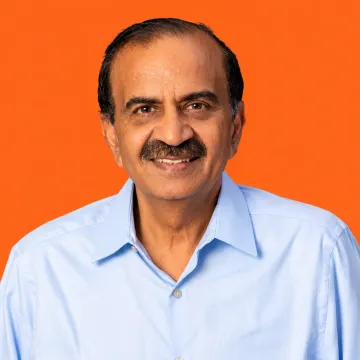
Part 2 - Interview of Rushabh Parmani, Co-Founder & Executive Vice President at Automation Anywhere
Rushabh Parmani, Co-Founder & Executive Vice President at Automation Anywhere
Rushabh is currently Co-Founder & Executive Vice President, Customer Success & Operations at Automation Anywhere. At Automation Anywhere, these people perform repetitive manual tasks by making end to end business processes more efficient and productive. They have built the…


Guest
Rushabh Parmani
Co-Founder & Executive Vice President at Automation Anywhere
See full bio: Rushabh Parmani
About Rushabh
- Co-founded Automation Anywhere in 2003 in San Jose, originally named Tethys Solutions.
- Was Co-Founder and Executive Vice President at the time of the interview.
- Has led product development, sales, customer support and professional services at the company.
- Began his career as a software engineer at Siebel Systems.
Transcript
This is Silicon Valley Tech, Behind The Scenes, a podcast hosted by Shawn Flynn and Sunil S Ranka. Here's where we talk to the real heroes to find out how decisions are made and how they're executed to create the thriving businesses of tomorrow. Thousands and thousands of miles away, that gives you a tremendous set of confidence. And that was the first aha moment in a very, very small environment, small company that we were back then. And then obviously, along the way, many, many aha moments came as we rolled out new products, you know, new geographies that we opened up. The first million dollar deal, the first hundred thousand dollar deal, we had different products. Anytime you have a first sale of that first version, obviously gives you that confidence. The first customer going on stage and speaking about you, you feel so good because till then, it's only you who have spoken, right? And when you have somebody else who has nothing to do with you, who comes and talks and praises about your product, your service, your people, that gives you so much satisfaction and the energy to go even more. We're going to continue where we left off last week. Now, last week, we talked about the journey from a company grown from four people to over 2,300 in 16 years. We talked about not taking any money and being sustainable and profitable for 10 years with exceptional growth.
We talked about having 1,300 global partners. And, you know, how should, how should we go and look at customer service now and in the future? But on this week's episode, we go even further and we talk about what's going to happen post COVID with automation and how it's going to help companies. We talk about what happens when a management team makes an unpopular decision, but still knows they have to implement it. We talk about how businesses are going to adapt in the coming years with implementing new technologies and much more. So let's start today's episode of Silicon Valley. If somebody is new and somebody is listening to this podcast and they want to start on an RPA journey, what would be your advice? And before that, for our other, for our listeners, some of them might not be familiar with some of the terms used, RPA, robotic process automation. Can you give us just a two sentence definition of that for your answer? Yes, that would be a good start. So we are in a space called RPA, which is robotic process automation, essentially the software that does, all the work that a human does in a repetitive fashion over and over again. And that's the business that we are in. We have millions of transactions processed on a daily basis, which don't require too much of sort of intelligence per se.
It is just moving of data across various applications. And that's where RPA comes in very handy. It's a very fast growing market. It's a, very attractive market because it's a classic supply demand problem today. The demand from customers, is huge supply from the vendors and partners is picking up, but it's not close to what customers need. So there is tremendous opportunity for people who want to grow the skills in the RPA space. We tie with a lot of universities where RPA is part of the curriculum, actually. So that obviously gives a tremendous boost to the students who take that course and come out and graduate and either take an internship or a job. It gives them that edge for sure. If you are a student or if you are fresh in the market for the job, RPA developer, there are lots and lots of roles, even in the RPA space, right? So once somebody was developing the bot, somebody who is doing the support on those bots, somebody who is designing a solution around the RPA, somebody who can look at the opportunities and what are the best opportunities to automate, right? I mean, that is a very rare skill as well. There are lots of opportunities in that if you are an individual person and we have lots of courses on our website, there's lots of material on the web, just in general on RPA. Most courses are free.
You can go learn, educate yourself and improve your chances dramatically to enhance your career in RPA. And if you are small consulting firm, and if you haven't ventured into the RPA, I mean, obviously there are, you can partner with one of the vendors and offer your RPA expertise. And again, as I said, customers are looking for these expertise. There's just not enough people in the market to provide this expertise. So there's lots of opportunities. Rishabh, this is great. If I'm a CIO or CXO and who wants to take up the journey of automation within my organization, what are the different things I should be doing? So first and foremost, being a CXO in an organization and thinking automation, that's the first big step that we encourage people to take because often automation comes with a lot of roadblocks, mainly in terms of people because it requires change. Automation is a synonym to change and all of us don't like change. So the fact that you are thinking, thinking automation, that is the first very big step because coming top down will definitely help create that mindset across your organization. The first one of the things that we encourage the CXOs to do is to spread the awareness and make people less fear about automation, you know, help them embrace the automation, encourage them to build automation, deploy automations in any form and any capacity, because when they see it working right in, in front of them, helping them doing and letting them do more value added work, they themselves are the champions and the evangelists who will take this to the next level.
So as a CIO, all you can do is provide the infrastructure and the support, but your entire organization and the people who are doing this automation are the ones who are going to take it further and you need them on their side. This is not one of those, you know, enterprise software type of a deployment that you do it and then they are using it on a day to day basis. People can build automation every single day and come up with new ideas on how you can connect all these different systems, come up with solutions that you haven't even thought for, come up with profit. There are ways where you can save costs, but there are also ways where you make profits and generate revenues. You know, automation ideas can generate revenues as well. So from a CXO point of view, you know, enabling the organization and setting it up for the success is number one criteria. And then obviously, it's what you want to do. If you are truly thinking strategic, then you need to look at automation platforms that provide you a complete, comprehensive solution from front office to back office to middle office to intelligent insights, all of that together and something that is easy to adopt because as it is, you have enough applications that we all touch. If there is one more application and it's hard enough, it's not going to fly. So it has to be very frictionless, very easy, maybe even cloud based, web based.
Those things make much more difference in today's world, especially in millennials, where you want to make things easy for them to adopt things. So combination of those things as a CXO for sure you should look into. And the other thing is obviously the footprint, the footprint of ecosystem that can help you support. Do you want to do this yourself? Do you want do it with the RPA vendor? Do you want it as a combination of your own team, RPA vendor and a partner together? Those are some of the questions that may not happen on the initial ground, but it will come and you need to be prepared to think through those questions as well, because that will define that ecosystem, if formed correctly, will decide how far you go and what kind of impact do you see in your organization? So thinking through all the steps right from inception to scaling it and to transforming your organization together as a holistic view will definitely help find how successful your journey is going to be. So with implementing this technology, I would gather that some people might be a little worried, a little scared that their jobs might be replaced. But at the same time, if they don't upgrade their systems, upgrade how they do business, their companies themselves as a whole might become obsolete.
How does one consider implementing this technology and making maybe those hard decisions? I think what we have learned last three months during this pandemic is that the adoption and the inclination of large organizations to move to cloud has accelerated significantly. Something even we did not anticipate, we thought it would take a new course when some of these large enterprises, including banks and health care companies, will move. But those discussions have happened. We speak to a lot of these CXOs all the time from large organizations and their appetite for cloud and cleanliness towards that is increasing dramatically. So in order to adopt the RPA in a very rapid manner, especially given that everybody is always working from home, things need to be simple. And whatever we as a vendor can do to make things frictionless for a customer will always and this adoption of cloud is one of the things that we are seeing picking up big time in the market. Our latest product is Cloud Native. That helped a lot. It's called A2019. So it's literally within minutes you can just go and, you know, start your automation journey because it's all SaaS-based, cloud-based implementation.
So that definitely will play a big role. And I think, as I mentioned earlier as well, there's always this fear about job loss when it comes to automation. But I think that has gone away to a certain extent over the last few years. In the early days, it used to be the case. But now people have realized that it's not about that. I think what automation brings is the opportunity as an organization that you never had access to. Before, because you just never had that kind of bandwidth. So right now it's about unlocking those opportunities and figuring out what is that right fit for your business, because everybody in a way is struggling during these tough times of COVID situation. You have to find the right opportunity with automation that can help you fight your competition in your space. You can find those revenue generating opportunities in a very quick time that will tremendously give you a boost. As an organization, we are seeing some of those things, especially in pharmaceutical business, where you can take the drug to the market even two months earlier. That has an impact, obviously, on that organization from a business point of view, but on humanity, where we get access to those drugs much faster. So we are seeing extreme cases of this implementation.
And I think some of the things that we are doing, we feel very good about it as a technology roadmap. And I see that evolving, obviously, more and more of AI. And I think that's going to be a big part of what we're going to be doing in the future. And I think it's going to take a lot of time and a lot of effort to do that. And I think we are going to be able to do that in the next couple of years. And we are already investing along those lines where a lot of descriptive steps to the customers saying that these are the things you should be doing. And that will go a long way in our view. That's perfect. Managing a team. Have you ever made an unpopular decision? And if so, how was that decision made? And implemented? What was the key takeaway from it? Fortunately, I have not made any unpopular decision yet, and I hope to keep it that way. You always make some mistakes here and there in hiring. I think what we've learned running this business is that if you make a mistake, don't live with it for too long. Otherwise, you know, it has all sorts of other ripple effects. The moment you realize you just cut the cord and you move on, you make that pivot. Whatever change you need to do, and it's not just about people, I'm just saying in general, sometimes you roll out products and you realize you're not seeing the returns that you thought you would.
The best thing you can do is cut that product line right away as opposed to sitting on it for several years because it will distract you. So one thing that has tremendously paid dividend is that we've always stayed true course of automation. In the last 17 years, many, many opportunities came our way. But we always stuck to the concept of automation, pure automation, you know, horizontal, agnostic automation and all those and that focus is paying off big time today. If we had diverted and made anything specific to certain types of application, that is not valued as much in today's market. The fact that you can automate using automation anywhere across 4,000 different applications in your landscape, that is a value. So that focus helped us a lot. But there are lots of mistakes that we made. I mean, there's no doubt about that. The idea is that you realize that it's a mistake intellectually, you know, being honest with your own self. If you admit that what is figuring out how to best correct it in the shortest possible time is the only answer. If you don't do it, then you're going to pay the price for it at some point. Perfect. So, Rushabh, I'm going to ask a question, which is you are one of the very few companies in the world who have received the most wanted funding from SoftBank. How did that happen?
And what does that experience look like? So back in 2018, obviously, when we are growing tremendously as we keep on acquiring customers and partners and we talk to a lot of industry experts around the world and we, including the analysts, we saw that there is a tremendous potential for this space, which we always believed. But, you know, the quantification kept on happening where it's in billions of dollars. And we are at one point where as a company with certain funds, a certain pool of people, if you just grow incrementally, it's not going to cut it. So and obviously it gives opportunities for other players to come in. And we decided at that point where we wanted to differentiate ourselves, become a true leader and be on a growth path that is hard to match. And that is the reason why we decided to seek external funding to basically give that, propel that sort of a growth. That's what other companies haven't thought of. So you always have to be competitively ahead of the rest. And that is why we started seeking external funding. And obviously, Cobbdev team and finance team and all of those, they vetted out all the possible investors and obviously were fortunate enough to, you know, have funding from SoftBank and helped tremendously as well in terms of guiding us and obviously investors who come with their connections as well.
So helping us make deals, et cetera. But I mean, we have other good investors. We are very fortunate to have as well, like Goldman Sachs and NEA, General Atlantic, all very well known. We are extremely proud to have them on our side as well. So I mean, it's all good so far. And we have a very, very healthy relation with all of our investors and board members. And with their guidance and collective wisdom, we hope to cross many, many new milestones in our journey. Now, in this interview, we've talked about SoftBank, we've talking about robotic automation, we've talked about growing a company from four people to having thirteen hundred global partners and we've covered so much. What's one thing that we haven't talked about that you'd want our listeners to take away from this interview? What I would highly encourage all the listeners is to think what automation can do to your life, your organization, your ecosystem that you are in. Because we truly believe that an idea can come from anywhere. What that means is, for example, we have this concept of bot store. We let anyone and everyone around the world, an individual developer to a large organization, to publish their bots on our bot store where millions of people can access it.
Now, it can be a simple idea that can save you two hours or it can be a groundbreaking idea that can help define a new way of doing work completely. So what I would encourage is think of ways where automation can truly impact life so you have all the tools available to get yourself acquainted with the technology, the market space, its potential, etc. That thinking from an automation microscope and a lens is super important. And if you can do that, I think you will be very, very valuable player wherever you go, whichever team you are part of, as long as you can. We are in automation space. Obviously, I can talk very passionately about automation. And if you start thinking of looking at any process with an automation system, it puts you in a different category compared to the rest of your peers. And that is one thing I would encourage all the listeners to do is don't get stuck into this tactical things or some things which is right in front of you, but see what you can do to impact the organization ecosystem you are by thinking automation. And if you keep thinking, you will teach two of your colleagues, your entire team, your organization to think automation. And that will have a far, far better impact than just, you know, creating certain skills.
In RPA, because, you know, that's very tactical that anybody will be doing anyway. But this will truly change lives, in my opinion. And I've seen it with my own eyes right in front of me. A lot of my customers, partners, a lot of my employees, my own life. Because when you think through automation lens, you think differently. And that's one piece of advice from my side. And Rishabh, if anyone wants to learn more about you, your company, what you're working on, what's the best way to go about doing it? The best way to do go about doing is, you know you go to automation anywhere, the first and foremost is we have Automation Anywhere University, which is open to all. We have an A people community, which is again open to all the thousands of our users are sharing their ideas, thoughts and issues and concerns and people responding and helping each other out. So there is lots of curriculum, lots of material on our website, on our portal. So I think that's the best way to start if you want to learn more. Rishabh, as you rightly said, customers are the most important part of any journey. You've been part of this customer success. In my opinion, it's one of the most important part of the organization's success. Being in this role, leading the customer success organization for Automation Anywhere, I consider myself very fortunate because what that does is it gives me complete 360 degree view of the customer.
Why they want RPA to, you know, how they go about choosing it, how they go about implementing it. What their initial success is and how they go about thinking bigger from that point of view. And what all of those mean to Automation Anywhere, because we have to do a lot of things to help them support and scale and grow in their journey as well. So connecting all those dots together obviously gives me a tremendous view and a line of sight across many, many different intersections and lots of intelligence that comes from that exercise. That's a very fortunate position. To be in. You are very close to the technology. You are very closed to the partner. You are very closer to the customer ecosystem and rest of our organization. And I think what we have seen is in early days, people used to think, you know, when RPA was not too mature in terms of its awareness and as a market, people used to take this crawl, walk, run type of approach where you want to do something small. When you see the return, then only you go to the next step and next step and so on and so forth. And now we have enough customer success stories out there in the market where people have seen tremendous benefits, not just in terms of savings and dollars, but the kind of things they could never do before.
And that has opened up a wealth of opportunities for our customers in terms of growing big soon and doing so only helps them because think of it this way. If I take a crawl, walk, run approach and I have paced that out over three years, then my run phase comes in the third year. I'm not forcing myself to do something different, something drastic in the first year. And nowadays we are seeing a lot of our customers taking those bold decisions in the early part of the RPA journey. And they are paying off because there are always these early adopters, people who want to not go by the status quo and we want to challenge the situation that you are in and people who are aggressive who want to be ahead of the competition. RPA is one of the biggest levers that you can use to get there. So that's one thing we are seeing a clear difference in the market where people are going big on get go and using RPA at the front and center of strategy in the journey. And obviously, from our point of view, you know, we learn every single implementation as we go along and we are there to help them across all fronts from customer success point of view. And we'll continue to do so.
Fantastic. And Rishabh from Sunil and myself, we want to thank you for your time today on Silicon Valley Tech. Thank you so much, Rishab. It was a pleasure talking to you. Thank you, guys. Thank you for listening to Silicon Valley Tech Behind the Scenes. To find out more, contact the team or to be a guest on the show, visit our website at SiliconValleyTechPodcasts.com. We look forward to hearing from you and remember to support the show by leaving a review to encourage us to keep creating great content like this. Thank you.
Part 2 - Interview of Rushabh Parmani, Co-Founder & Executive Vice President at Automation Anywhere
Rushabh is currently Co-Founder & Executive Vice President, Customer Success & Operations at Automation Anywhere. At Automation Anywhere, these people perform repetitive manual tasks by making end to end business processes more efficient and productive. They have built the worlds most advanced digital workforce platform, which combines robotic process automation, which will go into great detail today, artificial intelligence and machine learning and analytics. With over 2000 partners, including Microsoft, Google, and Amazon Web Services, and Salesforce, automation anywhere has operations in almost every country in the world.
Rushabh’s 19 years of experience includes:
He began his career as a Software Engineer in Siebel Systems. Right after his first job, Rushabh started this organization Automation Anywhere with other 3 of the founders. It’s been 16-17 years to Automation Anywhere is growing successfully.
At Automation Anywhere, they believe that people who have time to create, think, and discover build great companies. That's why they have dedicated the last decade to driving the adoption of robotic process automation technology in leading Financial Services, BPO, Healthcare, Technology, and Insurance companies—to name a few—across more than 90 countries. Their intelligent process robots transform the way businesses operate, delivering complex business and IT work across a range of processes including procure-to-pay, quote-to-cash, HR administration, claims processing, and thousands of other front and back-office processes.
In this interview we talk about:
- Discussing the growth of Automation Anywhere from 4 people to over 2300 in 16 years. What are the new systems and processes implemented in the company. With this exponential growth how does one plan out and then implement new untested business ideas?
- Automation Anywhere has 1300+ Global Partners and has operations in 90+ countries. Talking about working with different people and cultures in the world & how does one should look at customers and customer service.
- Automation and AI is key for the Workforce of the future, Rushabh shared how AA’s technology is adapting to be more relevant for the readiness for the Workforce of the future.
- When there is a major outside event, what is the best way for a company to adapt itself to survive and put itself in a position to thrive?
- How Rushabh is seeing the course of COVID, how automation is helping?
- How Rushabh is seeing the entire business adapt a change in the coming years? What is happening now that in recent years is obsolete that if companies don’t consider implementing might make them obsolete as well?
Help us reach new listeners by leaving us a rating and review! It takes less than 30 seconds and really helps our show grow, which allows us to bring on even better guests for you all! Thank you – we really appreciate it!
Learn more about Rushabh Parmani
Email: rparmani@automationanywhere.com
Follow Silicon Valley Tech Podcast on:
Contact Us: (650) 701-3468 / info@svtechpodcast.com
About Hosts:
Latest episodes
-
Part 2 - Interview of Wendy Fitzwilliam
Wendy Fitzwilliam, Miss Universe 1998 and former UN Goodwill Ambassador
-
Part 1 - Interview of Wendy Fitzwilliam
Wendy Fitzwilliam, Miss Universe 1998 and former UN Goodwill Ambassador
-
Interview of Larry Kesslin, Chief Connector at SPIRE
Larry Kesslin, Chief Connector at SPIRE
-
Part 2 - Interview of Prem Jain, CEO at Pensando Systems
Prem Jain, CEO at Pensando Systems
-
Part 2 - Interview of David Womark, an American Film Producer
David Womark, an American Film Producer
-
Interview of Lou Pambianco - Chairman and CEO of Startup Sandbox and Managing Director of Corporate Development Partners
Lou Pambianco, Chairman and CEO of Startup Sandbox and Managing Director of Corporate Development Partners
-
Part 1- Interview of David Womark, an American Film Producer
David Womark, an American Film Producer
-
Interview of Jitendra Waral, Senior Research Analyst - Internet & Consumer Electronics at Bloomberg Intelligence
Jitendra Waral, Senior Research Analyst - Internet & Consumer Electronics at Bloomberg Intelligence